Spa Treatment Pricing: The Menu Engineering That Doubles Retail Spend Per Visit
Spa treatment pricing that maximizes revenue per visit — add-on architecture, package math, membership tiers, and retail attach rates that hit 35%.

Spas that price treatments in isolation leave 40–60% of their revenue potential unrealized. The revenue breakthrough is menu engineering: the way add-ons, packages, membership tiers, and retail attach rates fit together to turn a $110 massage into a $145–$165 visit. Here is the structure that hits 35% retail attach and doubles revenue per visit without adding a single new client.
What Is Menu Engineering and Why Does It Matter More Than Treatment Pricing?
Treatment pricing is table stakes. Menu engineering is the multiplier.
A spa with a $120 massage charges clients $120. A spa with the same $120 massage but a well-designed add-on architecture, retail recommendation protocol, and membership offer averages $175 per visit from the same client — from the same 60-minute slot.
The mechanics:
- $120 base massage
- $25 CBD oil add-on (booked at confirmation, 26% conversion)
- $18 retail product recommended at checkout (32% purchase rate from therapist recommendation)
- Average visit revenue: $120 + (0.26 × $25) + (0.32 × $18) = $120 + $6.50 + $5.76 = $132.26
That's a 10% revenue increase per visit with zero additional marketing spend and no new clients.
What Are Benchmark Treatment Rates for 2026?
Pricing below market is as damaging as pricing above it. Below-market spa pricing signals quality problems, trains clients to expect discounts, and attracts price-shoppers with low loyalty.
According to the ISPA 2026 Consumer Snapshot, US spa-goers visit an average of 3.5 times per year. The revenue opportunity is not in attracting more visits — it's in maximizing revenue per visit through add-ons, retail, and membership conversion.
How Do You Design an Add-On Menu That Converts?
The add-on menu is not a list of optional extras. It's a revenue architecture with a designed presentation sequence.
Rule 1: Three to four options, not eight. More than four add-ons at booking creates decision paralysis and lowers conversion. Curate the highest-margin, most universally applicable add-ons.
Rule 2: Price add-ons at $15–$45. Below $15, the perceived value is too low. Above $45, clients start evaluating add-ons as standalone considerations. The $15–$45 range feels like an easy enhancement.
Rule 3: Present at booking confirmation, not intake. Clients are most receptive when they're already committed (post-booking) and thinking about their experience. Intake is too late — they're in task-completion mode.
Rule 4: Connect add-ons to outcomes. "Add CBD oil for enhanced muscle recovery" converts better than "CBD oil — $25."
How Do Treatment Packages Change the Revenue Model?
Treatment packages serve three business purposes: upfront cash collection, improved treatment adherence, and higher per-visit commitment.
The Series Pricing Formula: individual session price × (series length − 1). In other words, a 6-session series gets one session free. A 10-session series gets one free plus a 5% retail credit.
This structure is transparent (clients understand the discount immediately) and doesn't require complex math at the point of sale.
At a $120/session facial, a 6-session series = $600 (versus $720 for six single sessions). The studio receives $600 upfront — improving cash flow — and the client attends all six sessions because they've committed. Completion rates for series purchasers run 85–92% versus 45–60% for single-session clients who say they'll "come back" (Zatrovo spa cohort, 2026).
For the membership model that converts single-visit clients into recurring revenue, see our spa retention strategies guide.
What Does a Membership Tier Structure Look Like for a Spa?
Spa memberships work when they're priced to reward commitment without feeling like a trap.
The two-tier structure that converts:
Wellness Member ($99–$119/month). One treatment per month (60-minute service), 10% discount on retail, 10% discount on additional services. Unused monthly treatment rolls over for one month only.
Premium Member ($149–$169/month). One treatment per month (up to 90 minutes), 20% discount on retail, 15% discount on additional services, priority booking window, free add-on credit monthly.
Memberships should not include unlimited services — that destroys margin. They should provide one primary treatment per month at a price that's a meaningful discount from single-session rates, plus a retail incentive that drives product revenue.
At $109/month, a member commits to $1,308/year in guaranteed revenue plus retail purchases. A single-session client averaging 3.5 visits at $110 generates $385/year. The LTV difference is the business case for every spa membership conversation.
For appointment management that supports recurring membership bookings, see our spa appointment management guide.
How Do You Hit 35% Retail Attach Rate?
Retail attach at 35% requires a system, not good intentions.
Step 1: Every treatment ends with two specific retail recommendations. Not "we carry some great products" — "Based on your skin's dehydration, I'd recommend the hyaluronic serum we used today. Would you like to take it home?" Two options, not one, because offering a choice doubles commitment over a yes/no ask.
Step 2: Therapist incentive alignment. Therapists who earn a 10–15% commission on retail they personally recommend sell significantly more than therapists on flat wages. Track retail sales per therapist and share the data monthly.
Step 3: Post-treatment email with retail link. Within 48 hours of the visit, an automated email with "Products used in your treatment today" with direct purchase links. This captures clients who were interested but didn't buy on-site.
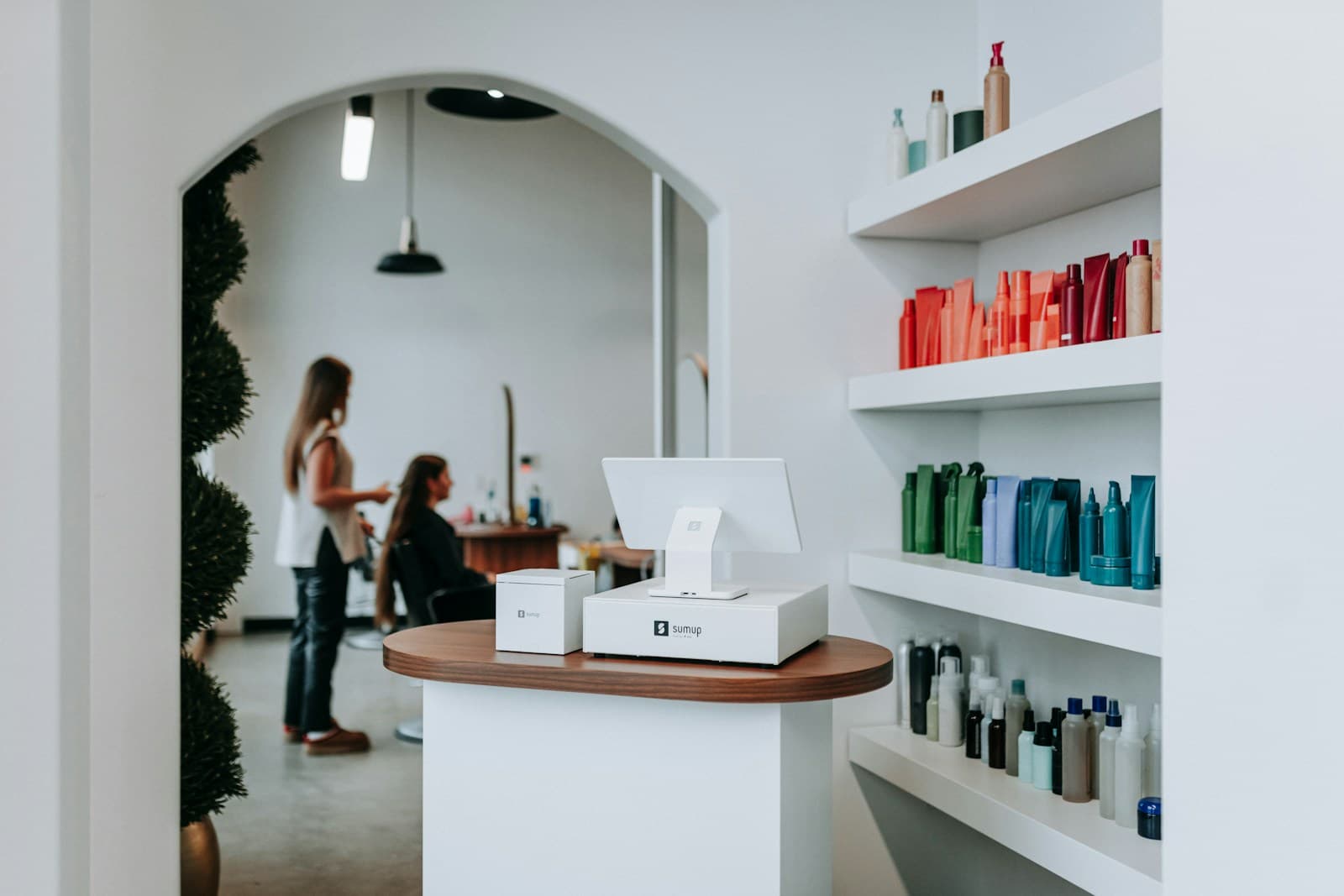
Step 4: Retail placement at checkout. Products at eye level, organized by treatment type, with shelf talkers that explain what each product does and which treatment it supports.
The combination of trained recommendation, staff incentive, email follow-up, and physical placement consistently moves retail attach from 10–12% to 28–35% in spas that implement all four within 90 days (Zatrovo spa cohort, anecdotal).
Run your studio on Zatrovo
Manage spa appointments, membership billing, and retail tracking in one platform built for wellness businesses.

We write playbooks for studio operators — based on data from thousands of studios running on Zatrovo across pilates, yoga, lash, nail, massage, salon, dance, and fitness.
Related reading
Beauty Treatment Pricing: Service Menu Rates That Reflect Skill and Suppress Discounting
A pricing framework for beauty treatments — facials, peels, waxing, lash — that reflects therapist seniority and eliminates the discount-request conversation.
Sauna and Cold Plunge Studio Software: Sessions, Memberships, Capacity
Recovery studio booking software has to handle sauna capacity, plunge water math, and memberships at once. Here is how operators set each one up.

Spa Booking Software: Features That Protect High-Value Appointments
Spa booking software should protect your highest-value slots. Here are the deposit rules, reminder timings, and gap-filling steps that actually work.