Salon Color Pricing: Balayage, Highlights, and Full Color — What to Charge
Color service pricing that accounts for developer cost, toner, and chair time — not just what nearby salons charge.
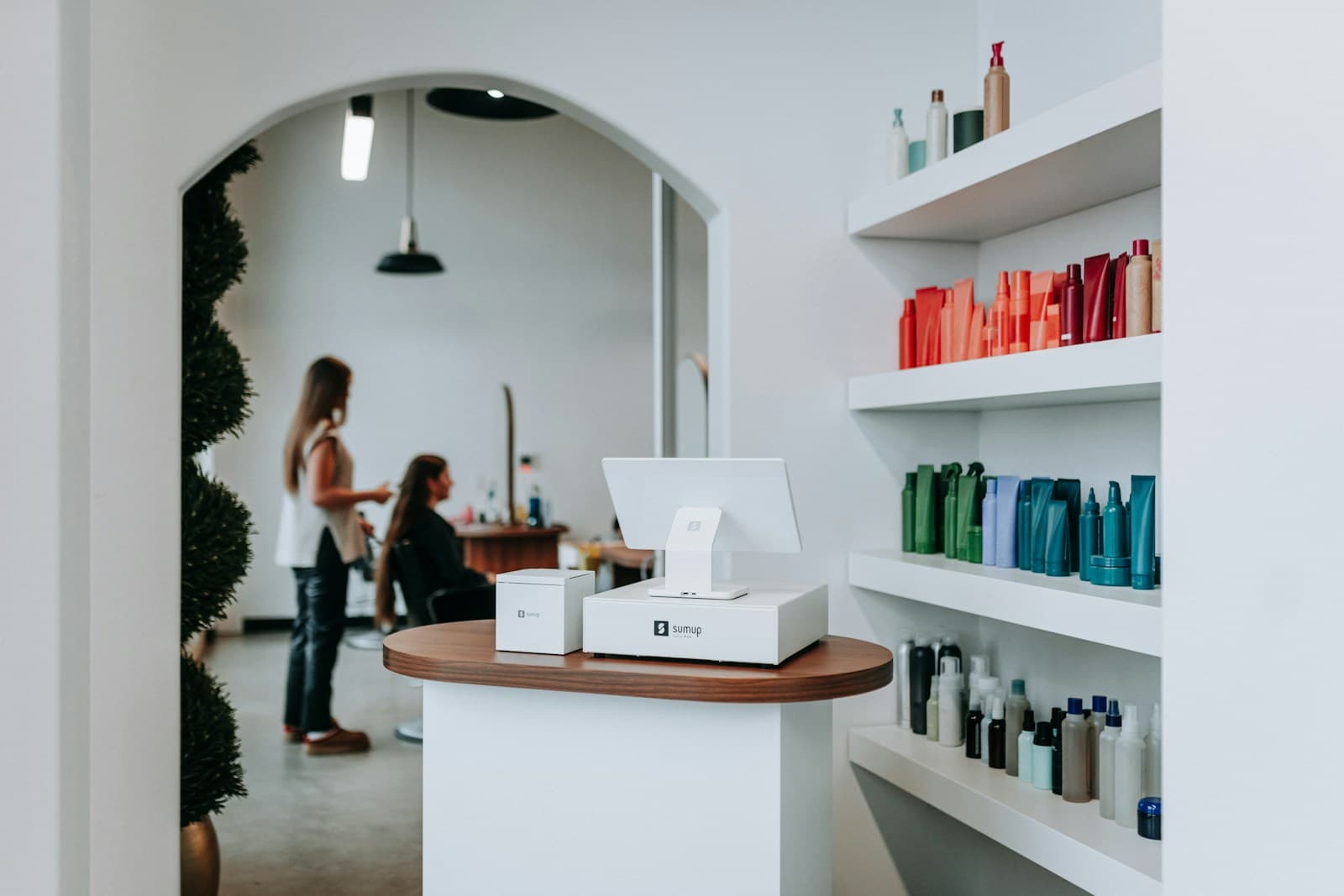
Color service pricing based on what nearby salons charge is how every salon in a market ends up at the same thin margin. The correct starting point is your actual cost: color product, developer, toner, foils, stylist time, chair allocation, and processing time — then price up from there. A full balayage that takes 3 hours and uses $18 in product needs to generate at least $200 in revenue to be worth the chair slot. Many salons price it at $160.
What Does a Color Service Actually Cost?
The color service cost has two components: product and labor. Most salon owners know their product cost approximately; almost none track their labor cost per service correctly.
Product cost for common color services:
Chair time is the cost you're selling. A stylist chair in an urban salon costs $25–$40 per hour in rent allocation. A 3-hour balayage at $175 generates $58/hour in gross revenue before product and stylist pay. That's not viable. The same service at $230 generates $77/hour — much closer to your break-even.
How Do You Price Balayage vs Foil Highlights vs Full Color?
These are three distinct technical services with different time requirements, product costs, and skill levels. Pricing them in the right relationship to each other is as important as the absolute price.
The Color Service Hierarchy:
- Full color (single process) — the fastest, least product-intensive service. Your baseline color price.
- Partial highlights — more technique than full color, more product. Price 30–50% above full color.
- Full foil highlights — 1.5–2× the time and product of partial. Price 60–100% above full color.
- Balayage — similar time to full foil but hand-painting technique requires higher skill. Price at or above full foil, often 10–20% premium over foil.
- Color correction — priced by time (hourly consultation + service) not by service type. $100–$175/hour is market rate.
If your full color is $75 and your balayage is $130, the gap ($55) doesn't reflect the actual skill and time difference. The balayage should be $150–$180 on a $75 base — a 100–140% premium.
What About Toner, Root Touch-Up, and Maintenance Services?
These services are frequently underpriced because they feel like "quick" additions — but they occupy chair time and require product and skill.
Toner. Price at $35–$65 standalone, $25–$45 applied with another color service. Always as a line item. It's not an optional upgrade — it's a service component that produces the final result. Bundling it into flat color pricing removes your ability to price it correctly as a standalone maintenance service.
Root touch-up. A 45-minute single-process root touch-up should be priced at $60–$100, not $35–$45. The common error is treating root touch-ups as half a full color service when they're actually full-difficulty in a shorter appointment window. The stylist is doing precise application on grown-out hair near the scalp — technically demanding work.
Gloss / shine treatments. 20–30 minutes, $35–$55. Frequently offered as a free add-on by stylists trying to please clients. Never free — it devalues the service and the skill.
For the full salon pricing and revenue model, see the running a modern hair salon guide and the hair salon service pricing guide.
How Do You Communicate Color Pricing Upfront?
Price transparency prevents checkout disputes. The three-step consultation process:
Step 1 — Consultation. Discuss the desired result and assess hair condition, length, and density. Give a price range: "A full balayage will be $180–$220 depending on how much product and time the result requires."
Step 2 — Mid-service check. If the work is trending toward the upper end of the range (dense hair, unexpected prior color resistance), mention it before completing the service: "This is taking about 20% more product than typical — your final total will be closer to $215."
Step 3 — Post-service confirmation. Show the client the result, itemize the services, and confirm the total before charging. No surprises.
Clients who understand what they're paying and why rarely dispute the bill. Clients who feel blindsided at checkout leave bad reviews.
What Stylist Pay Structure Works for Color Services?
Color services require significant product knowledge and skill. Pricing them correctly also requires understanding how stylist pay intersects with service revenue.
For commission-based stylists (40–55% of service revenue), a $200 balayage pays $80–$110 to the stylist. The studio keeps $90–$120 before product and overhead. This math works at scale. It breaks when color services are underpriced.
For the full stylist pay structure analysis, including how commission tiers interact with color service pricing, see the hair stylist commission guide.
According to Modern Salon, balayage has been the top requested color technique for five consecutive years — demand is structurally strong, which means salons that price it at a premium are not at risk of losing clients who specifically want the service.
Run your studio on Zatrovo
Manage color service bookings, stylist schedules, and client history from one platform.

We write playbooks for studio operators — based on data from thousands of studios running on Zatrovo across pilates, yoga, lash, nail, massage, salon, dance, and fitness.
Related reading
Hair Salon First-Time Offers That Convert — Without Training Price Shoppers
Intro offers that attract new clients without conditioning them to wait for discounts — structure matters more than discount size.
Hair Salon Membership Pricing: Subscription Math for Monthly Haircuts
Membership math specific to haircut frequency — how to price monthly plans without losing money on color clients.
Hair Salon Service Pricing: The Rate Card That Reflects Skill Level
Rate cards that price by stylist tier — so your best stylists earn more and clients self-select.