Nail Salon Client Retention: The 14-Day Rebook Habit
How to train clients to rebook at checkout — the scripts, visual cues, and perks that automate it.
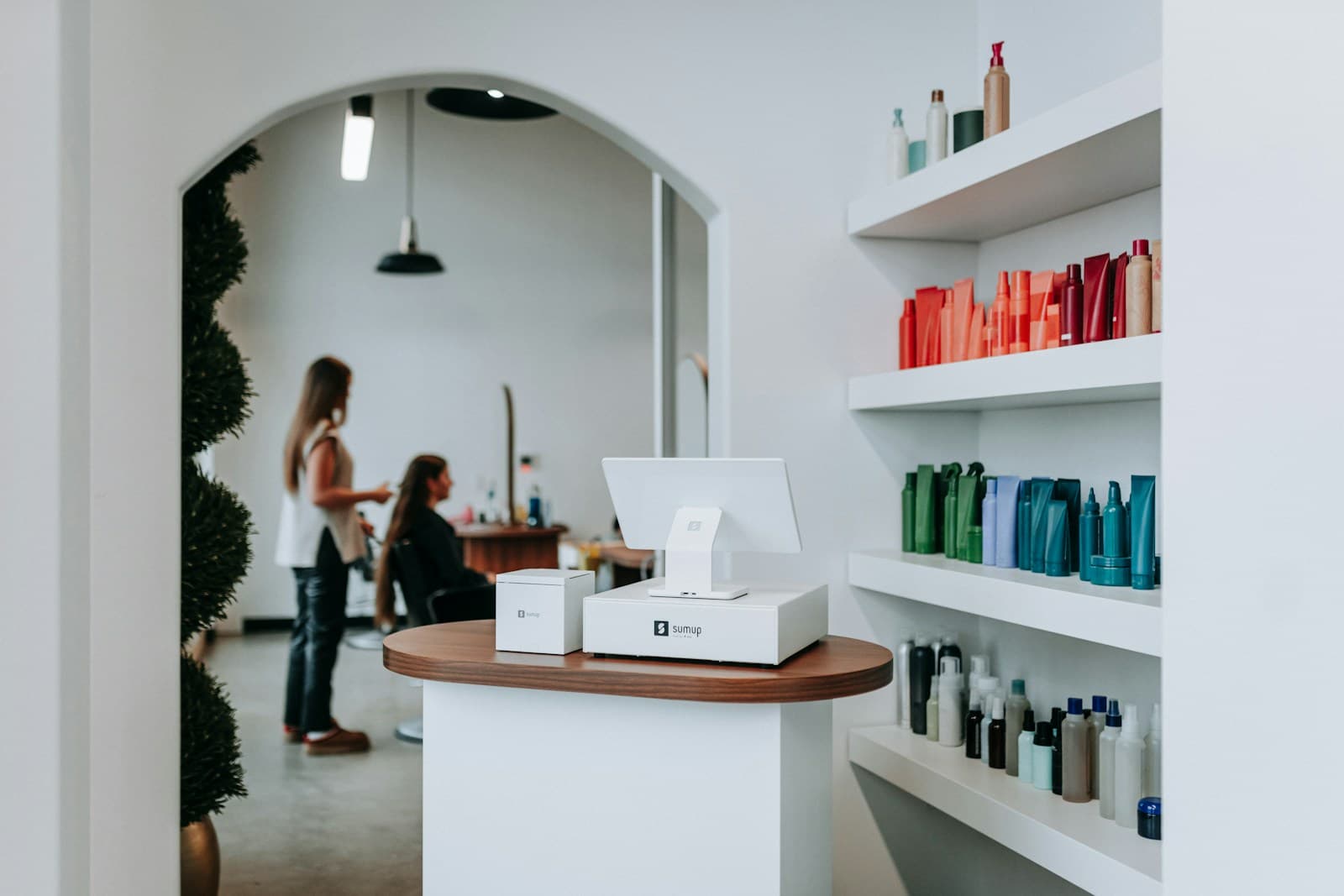
Nail salon retention is a rebooking habit problem. Clients who leave with a next appointment already on the calendar return at 3x the rate of clients who walk out without one. The habit forms at checkout — and a physical calendar on the wall, the right 10-second script, and one simple perk build it faster than any loyalty app.
Why Does Rebooking at Checkout Change Retention Rates So Dramatically?
The nail appointment gap is predictable: gel manicures show wear at 2–3 weeks, acrylics need fills at 2–3 weeks, pedicures hold for 3–5 weeks. Clients know this. The question is whether they book before the reminder forces them to.
A client who books their next appointment at checkout operates on the salon's schedule. A client who doesn't operates on their own memory — which is unreliable, especially when competing options (a new salon, a friend's recommendation, a Groupon) are a Google search away.
Why Does a Physical Calendar Outperform Digital Prompts?
Digital booking prompts — a button on the receipt, an automated text with a link — work. But for the in-chair rebook conversation, a physical calendar on the wall near the front desk works better.
The mechanism: a large, visible appointment calendar signals that the salon's slots are real, limited, and in demand. When a client can see other bookings filled in, the empty slot has implied scarcity. The question "when are you coming back?" feels like a natural response to the visual, not a sales attempt.
The calendar doesn't need to be your actual booking system. A 30-day wall calendar with appointment blocks drawn in (even if those blocks are approximate) serves as a visual anchor. Studios that added this to their checkout area reported a 12–18% increase in at-checkout rebook rates within the first month.
This parallels what the best hair salon win-back programs know: the in-person, tangible moment converts better than a digital nudge sent 24 hours later.
What Is the 10-Second Rebook Script?
The script is teachable and should be non-negotiable:
Tech: "Most clients come back in 2–3 weeks — want to grab your next spot before you head out?"
Client says yes: "Same day and time works for you?"
Client says "I'll call": "No problem — I'll send you a reminder in two weeks. Do you prefer text or email?"
That's it. Three scenarios, three responses. Short enough to teach in a team meeting, specific enough to be consistent across every tech on your floor.
The key is the framing: "most clients come back in 2–3 weeks" establishes the social norm before the question. Clients are more likely to rebook when they hear that rebooking is what other people do. It's not a sales pitch — it's a statement of how the appointment cycle works.
How Do You Handle the Client Who Always Says "I'll Call"?
Some clients genuinely prefer to book on their own timeline. That's fine — and they're not lost. The recovery sequence handles them.
Day 12: A personal text naming their last service and their usual day: "Hey [name], your gel is coming up on two weeks — want to grab your Thursday slot before it fills?"
Day 18: If no response: "Still have your usual Thursday at 11 open — let me know if you want it."
Day 25: If still no response: silence until day 35–40, then a win-back sequence begins.
The difference between this and a generic reminder is the specificity. "Your usual Thursday at 11" is a named, familiar slot. "Time for a touch-up!" is noise. Personalization at this level can be done manually for your regulars or scripted based on their booking history.
What Loyalty Perks Reinforce the Rebook Habit Without Conditioning Discounts?
The pre-book discount is the highest immediate-ROI retention tool. It's self-funding: the confirmed booking prevents the vacancy that costs you more than $5. The recurring series offer is the highest long-term retention tool — a client with three future appointments on the calendar doesn't comparison shop.
Do not build a complex points system. Every point system you don't explain in one sentence creates confusion and staff admin burden. A simple punch card or a clear pre-book incentive costs almost nothing to run and requires no software.
How Do You Measure Whether Your Rebook Sequence Is Working?
Track two numbers monthly: at-checkout rebook rate and 60-day retention rate for new clients.
At-checkout rebook rate: At the end of each day, count appointments completed vs. next appointments booked that session. Aim for 60%+. Post this by tech (or as a floor average) on the team board.
New client 60-day retention: Of clients who first visited 60 days ago, what percentage have returned at least once? Below 40% means your first-visit-to-rebook conversion is broken. Above 60% means your first-visit process is working.
For a comprehensive view of retention metrics across all studio types, the studio analytics dashboards guide covers how to build a weekly review dashboard.
For the full nail salon operations model, see the nail salon operators handbook.
Run your studio on Zatrovo
Manage nail salon bookings, rebook reminders, and client histories on one platform.

We write playbooks for studio operators — based on data from thousands of studios running on Zatrovo across pilates, yoga, lash, nail, massage, salon, dance, and fitness.
Related reading
Recovering Lapsed Nail Clients: SMS Over Email Every Time
Why nail clients respond to SMS 4x better than email — with a 7-day reactivation sequence.
Beauty Client Retention: The Rebooking Protocol That Outperforms Every Loyalty Card
The rebooking conversation at checkout — timing, language, and the results photo that makes the next appointment feel inevitable.
Hair Salon Client Retention: The Rebooking Window That Changes Everything
The rebooking window — how and when you ask for the next appointment — accounts for more retention variance than any loyalty program.