Nail Salon Software Hub: Booking, POS, and Management Tools for Nail Salons
Every nail salon software guide organized by use case — appointment management, POS integration, client loyalty, and the comparison guides that simplify the decision.
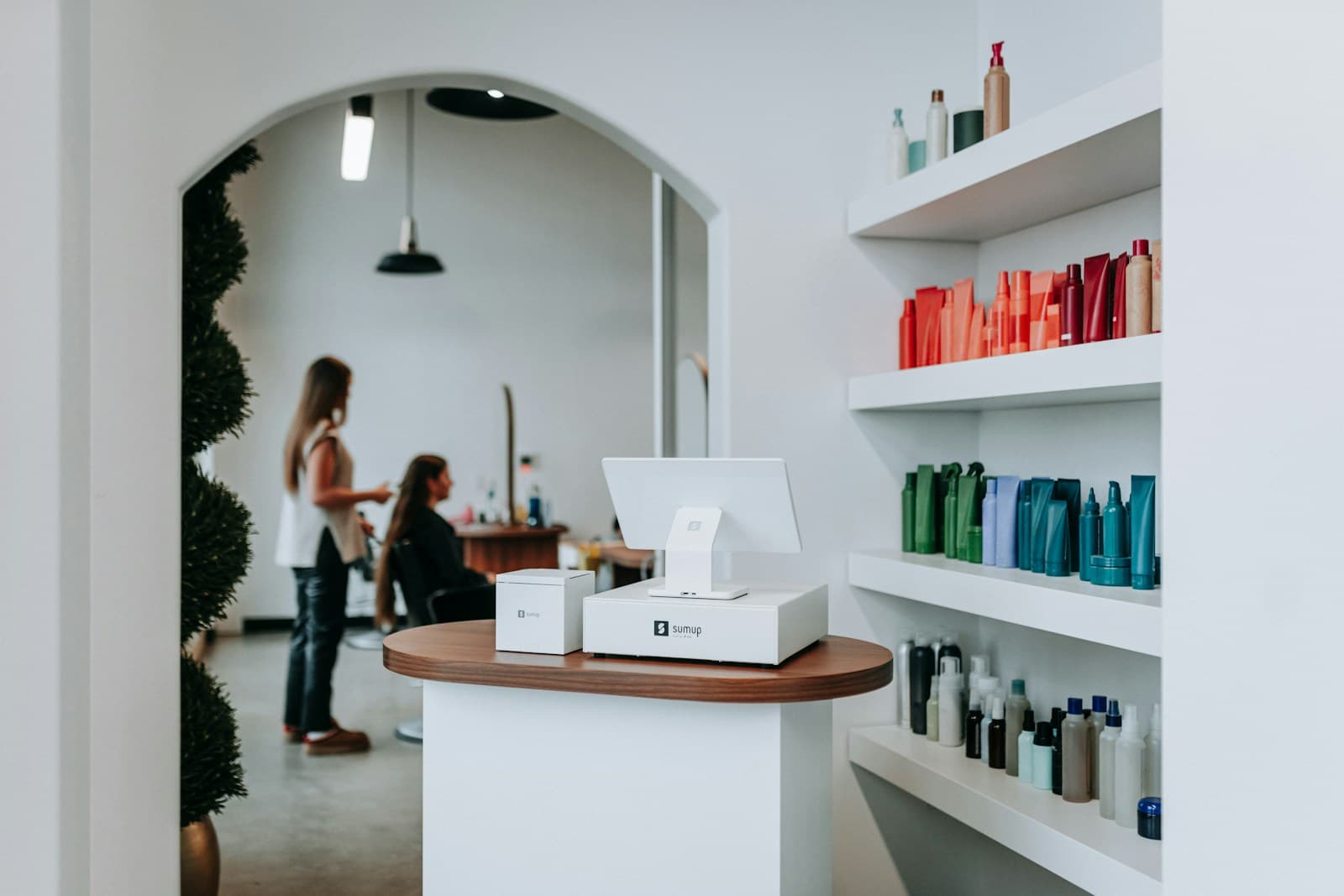
Nail salons need software that handles walk-ins alongside appointments, integrates with POS for retail, and tracks client loyalty without a separate system. The guides below are organized by use case — start with your most immediate need and follow the links to the specific guide that addresses it.
What Software Does a Nail Salon Actually Need?
Nail salon software requirements break into four categories. Most salons need all four; the question is whether they come from one platform or four.
Appointment booking. Online booking, multi-tech calendar management, reminder automation, cancellation policy enforcement, and card-on-file. This is the core requirement.
Walk-in management. A check-in queue for walk-in clients that integrates with the appointment calendar so techs see total demand, not just bookings. Salons without this manage walk-ins on paper or dry-erase, which creates errors and tech disputes.
POS and retail. Card processing, tip handling, retail product sales, inventory tracking, and gift card management. For salons where retail products are a meaningful revenue line, inventory accuracy is an operational requirement.
Client loyalty and retention. Point accumulation, milestone rewards, automated re-booking reminders, and birthday or anniversary offers. Loyalty programs are retention tools — the ROI is in reducing the rebooking gap between visits.
The 6.8-week vs 3.9-week rebooking gap is the most direct case for software investment. A client on a 3.9-week cycle visits 13 times per year; a client on a 6.8-week cycle visits 7–8 times. At $65 average service value, that difference is $325–$390 in annual revenue per client — from one operational change.
Appointment Booking for Nail Salons
The appointment booking guides cover the specific features that matter for nail salon operations.
The core features to evaluate:
Multi-tech calendar management — each technician's availability shown independently, with the ability for clients to book with a specific tech or "first available."
Service duration configuration — gel nails and manicures have different durations, and some services require drying time between steps. Your booking software should prevent overbooking by understanding the full service timeline, not just the appointment slot.
Cancellation policy with card-on-file enforcement — late cancellations and no-shows are particularly costly for nail salons because the service window is specific to a tech's availability. Card-on-file with automatic late-cancel fee charging reduces no-shows materially.
Booking interval configuration — prevents clients from creating accidental gaps in your schedule by constraining when new appointments can start.
For the platform comparison that covers these booking features specifically, see Zatrovo vs Vagaro.
Walk-In Management
Walk-in management is the gap in most nail salon software evaluations.
Most platforms are designed for advance bookings. Walk-ins require a different workflow: a client arrives, is added to a queue, and is served when a tech becomes available. The queue should be visible to all techs and the front desk simultaneously, update in real time as clients are served, and integrate with the appointment calendar so each tech's walk-in workload is visible alongside their bookings.
Platforms that handle walk-ins well:
- Square Appointments — has a walk-in queue feature on its POS terminal.
- Vagaro — supports a check-in queue mode.
- Fresha — designed for beauty businesses with explicit walk-in support.
Platforms that require manual workarounds:
- Mindbody — designed for class-based bookings; walk-ins require front desk management.
- Most fitness-first platforms — appointment-based only.
The operational impact of poor walk-in management: tech disputes over clients ("that was my walk-in"), inconsistent service delivery, and customer frustration from unpredictable waits. A digital queue eliminates all three.
POS Integration for Nail Salons
The nail salon POS requirements that most booking platforms underserve:
Tip handling. Staff need to record tips at payment, and the POS should support both cash and card tips with clear records for payroll. Platforms that process the service payment but not the tip separately create reconciliation headaches.
Retail product sales. Nail products — topcoats, cuticle oils, nail files — are a meaningful ancillary revenue for most salons. The POS should track inventory, generate low-stock alerts, and record product sales against client accounts for reorder recommendations.
Split payment. A client paying with two cards or a gift card plus cash — a common scenario — requires native split payment support. Front desk staff who have to manually calculate and process splits create errors and slow checkout.
Gift card management. Gift cards are a significant Q4 revenue driver for nail salons. The platform should issue, track, and redeem digital gift cards natively — not through a separate system.
Client Loyalty Programs for Nail Salons
A loyalty program for nail salons should do three things: reward visit frequency, automate rebooking reminders, and make points visible to clients at every interaction.
Points per visit or spend. Earn 1 point per dollar spent or 10 points per visit. Points accumulate toward rewards: a free gel nail with 50 points, a complimentary treatment upgrade with 100 points. The reward structure should be set so that a client who visits monthly reaches a meaningful milestone every 3–4 months.
Milestone triggers. Automated messages at milestone events: "You've earned enough for a free gel — book your next visit to redeem." These messages are the highest-engagement communications a nail salon sends, because they arrive with news the client wants to hear.
Rebooking reminders. Automated text or email sent at 4–5 weeks after the last visit: "Your gel was applied X weeks ago — it's time for a refresh. Book your next appointment." The optimal timing is just before the client's nails begin to show significant growth — catching them at the moment of awareness.
For the loyalty program and retention framework, see the nail salon business model guide and the comparison of platform options in Zatrovo vs Vagaro and the POS integration for studios guide.
Software Guides by Use Case
Booking management:
- Hair Salon Scheduling: Buffer Gaps and Double-Booking — applicable scheduling principles for nail salons
- Waitlist Promotion Automation — filling cancelled spots automatically
Pricing and revenue:
- Class Packs vs Memberships — if your salon sells treatment packages or memberships
- Pack Rollover Policy — retention mechanics for treatment package buyers
Client retention:
- Client Segmentation for Studios — how to segment and message differently by client behavior
Platform comparison:
- Zatrovo vs Vagaro — detailed feature and pricing comparison
Run your studio on Zatrovo
Manage nail salon appointments, walk-ins, POS, loyalty, and client communications on one platform.

We write playbooks for studio operators — based on data from thousands of studios running on Zatrovo across pilates, yoga, lash, nail, massage, salon, dance, and fitness.
Related reading
The Nail Salon Operator's Handbook: Margins, Staffing, Scheduling
Nail salon owners get hit with thin margins and chaotic walk-ins — here's how to fix both in 2026.
Nail Salon Walk-In Scheduling: Capturing the Whim
Software-enabled walk-in booking — wait-time estimates, tech availability, queue display — that captures drop-in revenue.
Nail Salon Front Desk: Scripts, Upsells, and Shift Coverage
Front desk scripts and upsell cues that raise average ticket by 18% without feeling pushy.