Opening a Pilates Studio: First 90 Days Playbook
Week-by-week launch plan for a pilates studio from lease signing through first profitable month.
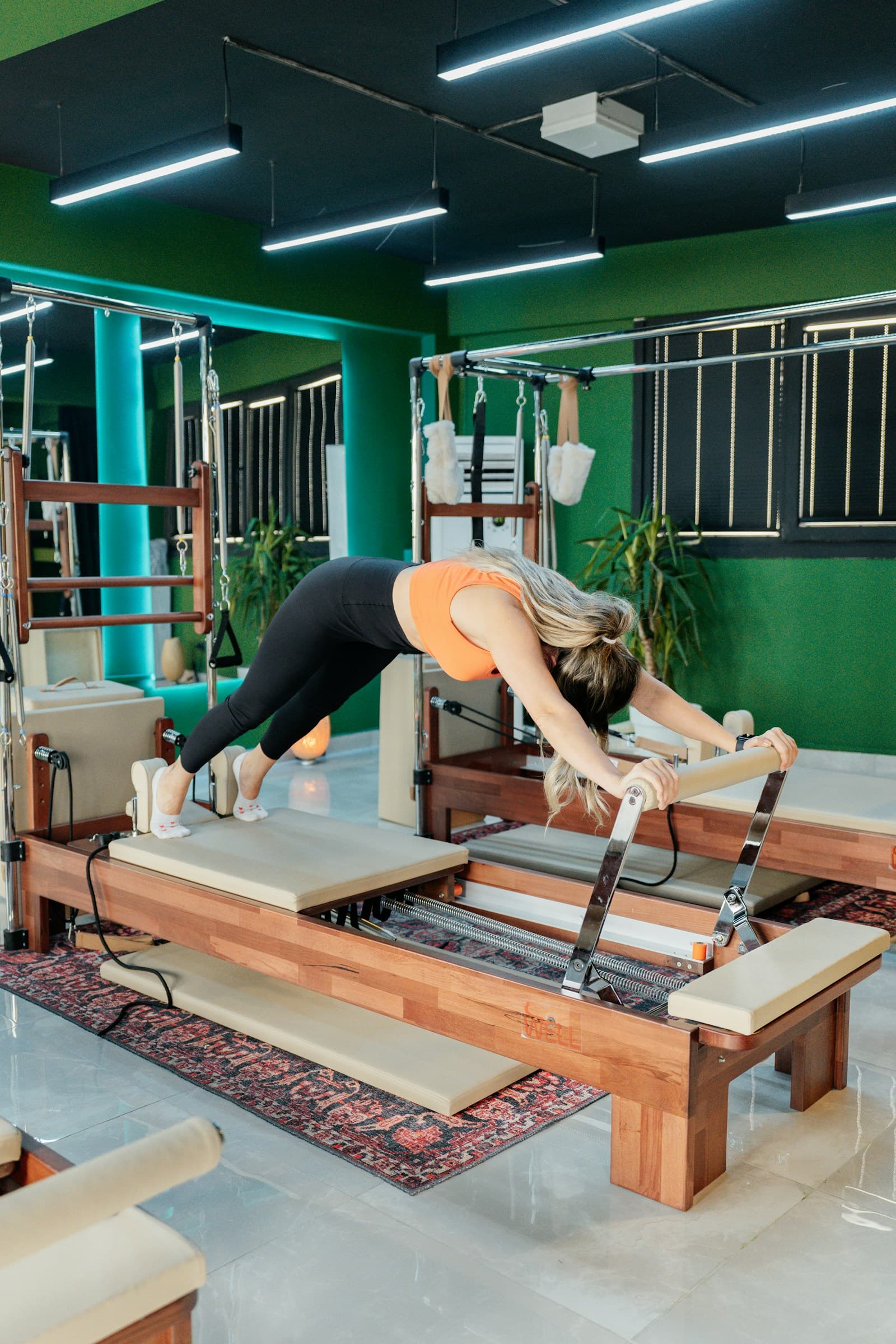
Opening a pilates studio takes roughly 60–90 days from lease signing to first class — and the studios that break even fastest are the ones that treat the pre-opening period as a client acquisition sprint, not just a build-out project. Studios that run a structured pre-sale and launch sequence reach their first profitable month 6–8 weeks faster than those that open cold.
What Does the First 90 Days Actually Cost?
The cash burn view is more useful than a single opening cost figure because it shows where money goes and when.
What Should Happen in Weeks 1 Through 4?
The pre-build weeks are client acquisition infrastructure, not downtime.
Week 1–2: Market research and lease negotiation. Visit three or more competitors. Take their intro offer. Note their pricing, class format, scheduling friction, and what the experience feels like as a client. This is your product research, not tourism.
Week 3: Lease signing and contractor kick-off. Sign the lease with tenant improvement terms negotiated in. Get contractor start date in writing. Begin the founding member email list — everyone you know in the area who might take pilates.
Week 4: Launch social presence. Post the studio announcement on Instagram, including a "founding member" waitlist link. Behind-the-scenes build-out content performs well and builds pre-opening following. Goal: 200–400 local followers before opening day.
How Do You Build the Founding Member Campaign?
The founding member offer is your pre-sale mechanism. It converts curious followers into committed clients before you open.
Structure:
- Rate: 15–20% discount off your standard membership rate, locked for 12 months (or as long as they remain a member)
- Quantity: 20–40 spots — genuine scarcity, not artificial
- Timing: Open the offer 4–6 weeks before your opening date, close it on opening day
- Pitch: "You're locking in the lowest rate we'll ever offer, for as long as you stay a member. We open [date]."
Do not charge founding members until opening day. Do collect payment method at sign-up to reduce no-shows. A founding member who provides a card but sees no charge until opening feels no friction. A founding member who is charged on day one and has no class to take has a bad experience.
For the full approach to intro offer structures and conversion math, see our pilates intro offer conversion guide.
What Is the Build-Out Checklist That Actually Matters?
Most studio build-out guides list 40 items. The ones that cause the most opening-day problems are:
HVAC capacity. Pilates rooms generate heat from physical exertion plus equipment. A standard office HVAC system is not sufficient. Get an HVAC contractor to size the system for your expected class density — 8 clients plus reformers in 800 sqft requires specific tonnage. Under-cooling is the top complaint from new studio clients.
Mirror installation. Mirrors must be tempered glass, anchored to studs, and positioned for full-body visibility from every reformer. Not a decorator preference — a safety and functional requirement. Budget this as a dedicated line item.
Flooring. Reformer studios need hardwood or engineered wood over a subfloor — not LVP or laminate. Reformer feet shift, slide, and compress surfaces. Flooring that flexes or chips under reformer load is a six-month replacement problem.
Accessibility. ADA compliance is not optional. Entrance, restrooms, and class area must be accessible. Verify with your contractor before build-out begins — retrofits cost 3x more than building it right initially.
How Do You Set Pricing Before You Have Competition Data?
Price from cost first, market second.
Step 1: Calculate your revenue floor. Add up your monthly fixed costs at full operation (rent, instructor pay, software, insurance, utilities). That total divided by 60 (your 3-month break-even target in clients) is your minimum revenue per client per month.
Step 2: Check the market. Visit local competitors or review their websites. Note reformer drop-in rates, pack prices, and membership options. Your target is at-market or slightly above — you are not competing on price.
Step 3: Structure the product line. Lead with a monthly membership (your highest-LTV product). Support with a 10-class pack (for clients not ready to commit). Offer drop-in at a price that makes packs and memberships financially obvious.
Do not open at below-market rates to "build the client base first." See our profitable pilates studio playbook for why this strategy destroys margin permanently.
What Software Should a New Pilates Studio Set Up Before Opening?
Set up before opening — not after. Clients will try to book from day one.
Minimum viable stack:
- Booking software with class timetable, self-service booking, and waitlists. The studio should be bookable online within two weeks of your opening announcement.
- Payment processing integrated with booking — not a separate Venmo or manual invoicing process.
- Pack and membership management — clients should be able to buy a founding member pack from your website the day you announce it.
- Automated reminders — class confirmations and 24-hour reminders reduce no-shows from day one.
Choose a platform in week 8 of your build-out, not week 11. You need two to three weeks to configure class types, build your schedule, and test the booking flow before going live with real clients.
What Are the First 30 Days of Operation?
The first month is a data collection sprint.
- Week 1: Soft open for founding members and their guests. Track every booking, attendance, and feedback comment. Fix friction before scaling.
- Week 2: Open day for the public. Run free trial classes, collect leads, convert with enrollment conversations.
- Weeks 3–4: Follow up with every trial class attendee who did not convert. Use your 14-day reactivation sequence template from the start — the habits you build in month one persist.
Track one number above all others in month one: trial-to-membership conversion rate. If it falls below 30%, your enrollment conversation needs work before you invest in marketing to drive more trials.
For the full approach to pilates class pack pricing that supports your launch revenue model, see our pilates class pack pricing guide.
Run your studio on Zatrovo
Set up class scheduling, founding member packs, and booking automation before opening day.
Sources:
- Small Business Administration — tenant improvement allowances — commercial lease guidance
- Pilates Method Alliance — industry certification and market data

We write playbooks for studio operators — based on data from thousands of studios running on Zatrovo across pilates, yoga, lash, nail, massage, salon, dance, and fitness.
Related reading
Pilates Studio Business Plan: Real Template with Numbers
A business plan framework with P&L projections for a 12-reformer pilates studio.

Opening a Lash Studio: 30-Day Pre-Launch Playbook
A 30-day pre-launch plan that books the first 60 clients before the doors open.
Opening a Yoga Studio: Real Cost Breakdown by Market
What a yoga studio actually costs to open in tier-1, tier-2, and tier-3 markets — line by line.