How to Run a Profitable Pilates Studio: 2026 Operator's Playbook
Real benchmarks, pricing math, retention plays, and staffing playbooks for pilates studio owners in 2026.
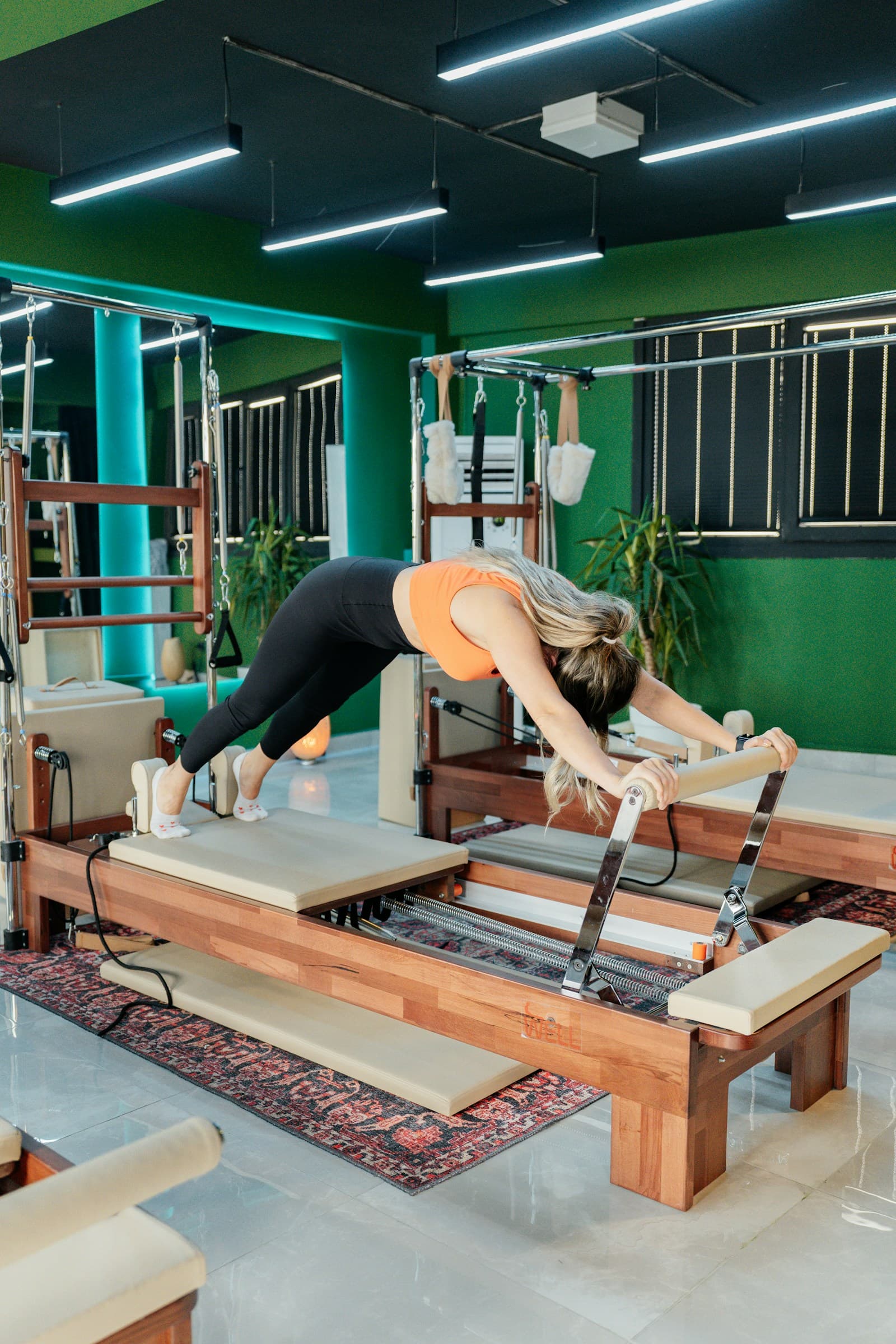
The studios that clear 50%+ margin in 2026 share one thing: they treat pilates as a pricing business first and a movement business second. The median US reformer studio on Zatrovo generates $34,000/month in revenue, but the top quartile earns nearly the same dollar profit on half the revenue — because they priced right, staffed lean, and built recurring revenue from day one.
What Does a Profitable Pilates Studio Actually Look Like?
Most profitable studios are smaller than you think. Profitability is a margin problem, not a revenue problem.
Studios with 6–10 reformer beds, two part-time instructors, and a well-priced membership program routinely clear 45–55% net margin. Studios chasing scale — 20 beds, five instructors, two front-desk staff — often run at 25–35% because overhead scales faster than revenue. The first thing to do is model your break-even at your current size before assuming more capacity solves the problem.
How Do You Set Reformer vs. Mat Pricing Without Leaving Money on the Table?
Reformer classes should carry a 40–80% price premium over mat. Anything less is underpricing the equipment, the class size constraint, and the client perception you've built.
Here's the math. If your mat drop-in is $25, reformer should be $35–$45. If reformer is $30 and mat is $25, clients correctly read them as near-equivalent and will migrate to mat when reformer books up. That erodes reformer demand.
In US urban markets, the benchmarks look like this:
The critical rule: never let your pack or membership price per class fall below your direct instructor cost per class. If you pay an instructor $45 to teach a reformer class with 6 clients, your revenue floor is $7.50/client. A 10-pack at $200 ($20/class) works. A 10-pack at $120 ($12/class) barely covers the instructor, let alone rent.
Read the full breakdown in our pilates class pack pricing guide.
Class Packs or Memberships: Which Model Actually Wins?
Memberships win on margin and retention. Packs win on acquisition and cash flow. The best studios run both.
The fundamental difference is cash flow timing. A 10-class pack at $350 hits your account today. A $175/month membership hits it every month for as long as the client stays. In the early months of a studio, packs feel better because cash is immediate. But by month 12, a studio with 60 members on $175/month has $10,500 in locked-in monthly revenue before selling a single drop-in or pack. That's the value of memberships — you know the floor.
The hybrid model is what most mature studios land on. Memberships become the anchor product you actively sell. Packs serve clients who travel frequently, try the studio, or are not ready to commit. Price packs at a per-class rate 25–35% higher than your membership effective rate — otherwise there's no financial incentive for clients to commit.
For a full breakdown of how to structure membership tiers, see our pilates studio membership pricing guide.
What's the 60-30-10 Revenue Split and Why Should You Target It?
The 60-30-10 Pilates Revenue Split is a benchmark allocation for a stable reformer studio: 60% from recurring memberships, 30% from packs and drop-ins, and 10% from retail, workshops, and one-off events.
Studios that hit this ratio have predictable cash flow, healthy acquisition (the 30% pack/drop-in category feeds new membership sign-ups), and a small but real contribution from ancillary revenue. If your membership percentage is below 40%, you're too dependent on one-off sales. If it's above 80%, you may be leaving acquisition revenue on the table by not having accessible entry points.
Track this split monthly. It's a leading indicator. If memberships drop from 58% to 49% in two months, something is eroding retention — investigate before it compounds.
How Do You Structure Instructor Pay Without Killing Your Margin?
Instructor pay is the single largest variable cost in a pilates studio. Get it wrong and you can't grow. Get it right and you can scale without the margin collapsing.
The three common models:
Flat rate per class. Simple to administer. Instructors know what they earn. Ranges from $35–$65 for group reformer and $20–$40 for mat. Risk: you pay the same whether there are 2 clients or 8.
Percentage of class revenue. Aligns instructor income with class performance. Typical range is 25–35% for group, 40–50% for privates. Risk: harder to predict payroll; instructors may resist teaching underpopulated classes.
The 3-Deck Instructor Ladder. This is the model that balances both. Instructors start on a flat rate (Deck 1). Once they consistently fill classes above a defined threshold (e.g., 70% capacity), they graduate to a higher flat rate (Deck 2). Senior instructors who build their own client books and teach 15+ hours/week move to Deck 3 — a percentage split with a guaranteed minimum. The ladder rewards performance, reduces the risk of paying above market for low-attendance classes, and creates a retention mechanism for your best instructors.
One hard rule: your total instructor payroll should not exceed 35% of gross revenue. If you're above that, your pricing is too low, your class sizes are too small, or your schedule is too sparse. Run the numbers before adding a new instructor.
For a full breakdown, read our pilates instructor pay guide.
How Many Classes Per Week Is the Right Schedule?
The right schedule is the one where average class attendance exceeds 65% of capacity. More classes than that is the trap.
New studios often build a 25–35 class schedule because it feels like a full business. But 25 classes at 30% average attendance generates less revenue than 14 classes at 70% attendance — and costs significantly more in instructor pay, room wear, and schedule management.
Start with 10–14 classes per week. Fill them. Then add.
The studios that over-schedule in year one do it for two reasons: they want to appear full and available, and they're afraid of turning clients away. Both are understandable. Both cost money. Under-scheduling slightly and creating genuine demand for popular time slots is better for pricing power than an always-open calendar.
What Kills Retention and How Do You Stop It?
The three biggest retention killers in pilates studios are scheduling friction, no-show tolerance, and the invisible drop-off after an intro offer.
Scheduling friction. If clients can't self-book online in under 60 seconds, attendance suffers. Every added step — email to reserve, DM on Instagram, calling in — costs you a booking. Invest in software that supports real-time class booking with waitlisting. Read our overview of pilates studio software features to see what to look for.
No-show tolerance. Studios without a no-show or late-cancel policy lose 15–22% of potential class revenue to empty reserved spots (Zatrovo studios, 2026, n=128). A 12-hour cancellation window with a class credit forfeit on late cancels is the minimum. Some reformer studios charge $15–$25 for no-shows. Read our pilates no-show policy guide before deciding.
The intro offer cliff. A new client completes their 3-class intro series and hears nothing for two weeks. They forget to re-book. They try a competitor. You lost them. The fix is a structured follow-up: an automated email on day three after the last intro class with a clear next step and a time-limited offer to convert.
How Do You Handle Pricing Increases Without Losing Clients?
Raise prices once a year, with 30-days notice, and never apologize for it.
The operators who avoid price increases are the ones paying 2021 rates in 2026 and wondering why the business doesn't cash flow. Inflation, rent increases, and rising instructor pay are real. Your pricing has to reflect that.
The pattern that works: announce the increase with specific language ("Starting June 1, our reformer membership moves to $195/month, up from $180") and give existing members a 30-day window to lock in their current rate by prepaying three months. This generates a cash infusion, rewards loyal clients, and reduces churn from the announcement.
Lock current rates for existing members for 12–18 months after a price increase. Clients who feel protected from increases become vocal advocates. Clients who feel surprised by them churn.
Do not discount to soften the blow. A "loyalty discount" after a price increase signals that the new price is negotiable. Instead, grandfather existing members and hold the line on new sign-ups.
What Technology Stack Does a Pilates Studio Actually Need?
You need scheduling software, payment processing, and client communications. Everything else is a later problem.
The core requirements:
- Class scheduling with self-service client booking and waitlists
- Pack and membership management (auto-billing, expiry tracking, freeze/pause)
- Automated reminders (24-hour class reminder, no-show follow-up, renewal nudge)
- Basic reporting: revenue by class type, attendance by instructor, membership churn rate
Studios often over-invest in technology early. A $400/month all-in platform is not meaningfully better than a $90/month platform at 30 clients. Buy the complexity when you need it.
Platforms commonly used in the pilates market include Mindbody, Mariana Tek, Arketa, and Walla. Each has real strengths. Mindbody is the most widely known but carries a learning curve and pricing that scales with features. Mariana Tek is built for boutique fitness and handles membership complexity well. Arketa and Walla are newer entrants with cleaner UIs and faster onboarding. Compare them honestly against your actual requirements — not feature lists.
For a feature-by-feature breakdown of what pilates studios specifically need, read our pilates studio software features guide.
What Are the Biggest Financial Mistakes Pilates Studio Owners Make?
The four mistakes that show up most consistently in struggling studios:
1. Signing too much space too early. Reformer beds require significant square footage. Many studios sign 3,000+ sqft leases before they know their demand. Start with 4–6 beds in 1,200–1,800 sqft. You can always add beds. Breaking a lease is catastrophic.
2. Underpricing to "build the client base first." The clients you acquire at $25/reformer class become anchored to that price. When you try to move to $45, they feel cheated. Price at or near market from day one — use an intro offer to lower the barrier to try, not a permanently low price.
3. Not tracking lifetime value (LTV). Studios that don't know their average LTV per client can't evaluate their acquisition spend rationally. If your average member stays 14 months at $180/month, their LTV is $2,520. Spending $150 on ads to acquire that client is rational. Spending $600 is not.
4. Paying instructors before understanding their true cost. Instructor cost is not just their per-class rate. Add payroll taxes (if W-2), scheduling admin time, cover costs when they cancel, and substitution fees. The all-in cost of an instructor is typically 20–30% higher than their nominal rate.
According to the Pilates Method Alliance, the pilates industry in the US has grown consistently over the past decade, with rising demand for certified instruction and premium studio experiences. That demand does not guarantee profitability — but it does mean the market rewards well-run operators.
How Do You Evaluate Studio Performance Month to Month?
Four numbers. Review them monthly, not quarterly.
Revenue per available class slot (RevPACS). Total monthly revenue divided by total class slots available. If you have 200 class slots at an average capacity of 8, that's 1,600 available spots. If revenue is $28,000, RevPACS is $17.50. Benchmark: profitable studios target $20–$35 per slot depending on format.
Membership churn rate. Members lost in the month divided by members at the start of the month. Anything above 5% monthly (roughly 46% annual) is a retention problem. Target under 3% monthly.
Pack burn rate. What percentage of outstanding pack classes are being used month over month? Low burn rate means clients have packs they're not using — which sounds fine until they ask for a refund or go dormant.
Instructor cost as % of revenue. Track this every month. If it creeps above 35%, something changed: class sizes dropped, a new instructor isn't filling classes, or you added too many schedule slots.
What Do the Best-Performing Studios Do Differently?
The studios in the top quartile by margin share five practices.
They priced at market or above market from opening. No "build the client base first" discounting.
They converted to majority-membership revenue within 18 months. The 60-30-10 split is the target, and they hit it.
They kept their schedule lean until demand justified expansion. Average attendance above 70% before adding classes.
They wrote and enforced a cancellation policy from day one. Not because they're harsh, but because it trains client behavior early. Changing policy after 18 months of tolerance is much harder than enforcing it from the start.
They tracked four key metrics monthly and acted on deviations. Data doesn't manage itself.
None of these are expensive or complicated. They're discipline applied consistently.
The IHRSA (now AHFS) Global Report tracks boutique fitness industry trends and finds that studios with recurring revenue models (memberships, auto-renewing packs) consistently outperform drop-in-dependent studios on both retention and profitability. The pilates segment follows this pattern.
Run your studio on Zatrovo
Class packs, memberships, scheduling, and payments — all on one platform for pilates studios.

We write playbooks for studio operators — based on data from thousands of studios running on Zatrovo across pilates, yoga, lash, nail, massage, salon, dance, and fitness.
Related reading
Pilates Studio Software Hub: Reviews and Comparisons for Studio Owners
Every pilates studio software guide in one place — booking platform reviews, feature comparisons, and the decision framework for choosing the right system.
Pilates Studio Front Desk Training Playbook
Scripts, SOPs, and upsell cues that turn a pilates front desk from liability to profit center.
Pilates Studio Operations: The Daily and Weekly SOP
The open, close, and weekly cleaning SOPs that keep a pilates studio running without the owner on-site.