Yoga Teacher Pay Rates: Flat, Per Head, and Rev Share Compared
Real numbers on the three common yoga teacher pay structures and when to use each.

Per-head pay is the counterintuitive choice for yoga studios focused on long-term retention: teachers earn more when students come back, so they have a direct financial incentive to build client relationships. The studios that discovered this in their own data report 18% longer client retention for per-head teacher cohorts than flat-rate cohorts (Zatrovo benchmark, 2026, n=89).
Why Yoga Teacher Pay Structure Affects Client Retention — Not Just Cost
Teacher pay structure changes what teachers optimize for. A flat-rate teacher earns the same whether your client returns next week or never comes back. A per-head or revenue-share teacher earns more when clients return consistently.
That alignment creates a meaningful difference in teacher behavior: per-head teachers are more likely to learn client names, remember conversations, check in with clients who missed a class, and market their own schedule.
What Does the Flat Per-Class Rate Model Look Like?
Pay the teacher a fixed dollar amount per class, regardless of how many students show up.
Market rates for urban US yoga studios:
Vinyasa / flow classes: $35–$55/class for newer teachers, $50–$75 for established teachers. Hot yoga / Bikram: $40–$65 for established teachers (higher because of room prep and physical demands). Specialty formats (aerial, AcroYoga, inversions): $50–$80, reflecting the skill premium. Meditation / restorative: $30–$50 (often lower because these attract more practitioners who can teach). Yin yoga: $35–$55.
The strength of flat rate: teachers can plan their income. They're not anxious about class attendance. They take off-peak slots without financial penalty.
The weakness: the studio pays the same for 4 students as for 24. At full capacity, the studio's payroll percentage is excellent. At low attendance, it can exceed 50% of class revenue.
What Does Per-Head Pay Look Like?
Pay a fixed dollar amount per student who attends.
Typical per-head rates: $5–$10 per student. A $7/head teacher with 10 students earns $70. With 18 students, they earn $126.
The strength: the studio only pays for attendance generated. Low-attendance classes cost less. High-attendance classes pay more, which attracts and rewards the best teachers.
The weakness: teacher income is unpredictable. A new teacher building a base earns very little in early months. Per-head without a floor feels punishing and drives away teachers before they have a chance to build.
The fix is a guaranteed minimum per class: $30–$40 floor regardless of head count. The teacher earns the higher of $7/head or $35, whichever is more. This removes the low-attendance risk without giving up the alignment effect.
How Does Revenue Share Compare?
Revenue share at 29% without a floor performs similarly to per-head at $7 with a floor across most attendance scenarios. The main difference is that revenue share automatically adjusts when your class prices change — which is useful if you run different price tiers by day or format.
When Should You Use Each Model?
Match pay structure to teacher maturity and class type.
Flat rate: New teachers (first 90 days), off-peak slots with inherently low attendance, substitute teachers covering a single class.
Per-head with floor: Established teachers with 6+ months at the studio, teachers actively building their client base, mid-peak slots where attendance is variable.
Revenue share with floor: Senior teachers with full books, teachers who bring their own clients, specialty format teachers whose unique skill commands a price premium, workshop leaders.
What Are the Tax Implications of Each Model?
The classification question — W-2 employee vs. 1099 contractor — matters more than the pay structure itself for tax purposes.
Teachers on your weekly recurring schedule who use your studio's equipment and brand are almost always W-2 employees under IRS classification rules (behavioral control + financial control + ongoing relationship). Treating them as 1099 to avoid FICA taxes is the most common audit trigger for yoga studios.
Guest teachers for single workshops — their own content, their own audience, booked as a one-off — are typically defensible as 1099. The distinction is ongoing vs. project-based.
For a full classification breakdown, read our instructor pay structures compared guide.
How Do You Structure Workshop and Private Pay?
Workshops: 40–60% of net revenue to the teacher. Calculate net as gross revenue minus room cost and any paid marketing (not your internal time). A 50/50 split after a fixed $200 room cost is easy to communicate and hard to dispute.
Privates: 40–50% to the teacher. State the split in the employment agreement. Define whether tips count (they typically should — tips are income, and the teacher earned them).
Both should be in writing before the first class.
Read the broader studio model in our yoga studio operations guide and the yoga studio membership pricing guide.
Run your studio on Zatrovo
Track per-head pay, revenue share, and payroll reports automatically for yoga studios.

We write playbooks for studio operators — based on data from thousands of studios running on Zatrovo across pilates, yoga, lash, nail, massage, salon, dance, and fitness.
Related reading

Hiring Yoga Teachers: The Audition Protocol That Predicts Retention
A 3-stage audition protocol — including the energy test — that predicts which yoga teachers will stick.
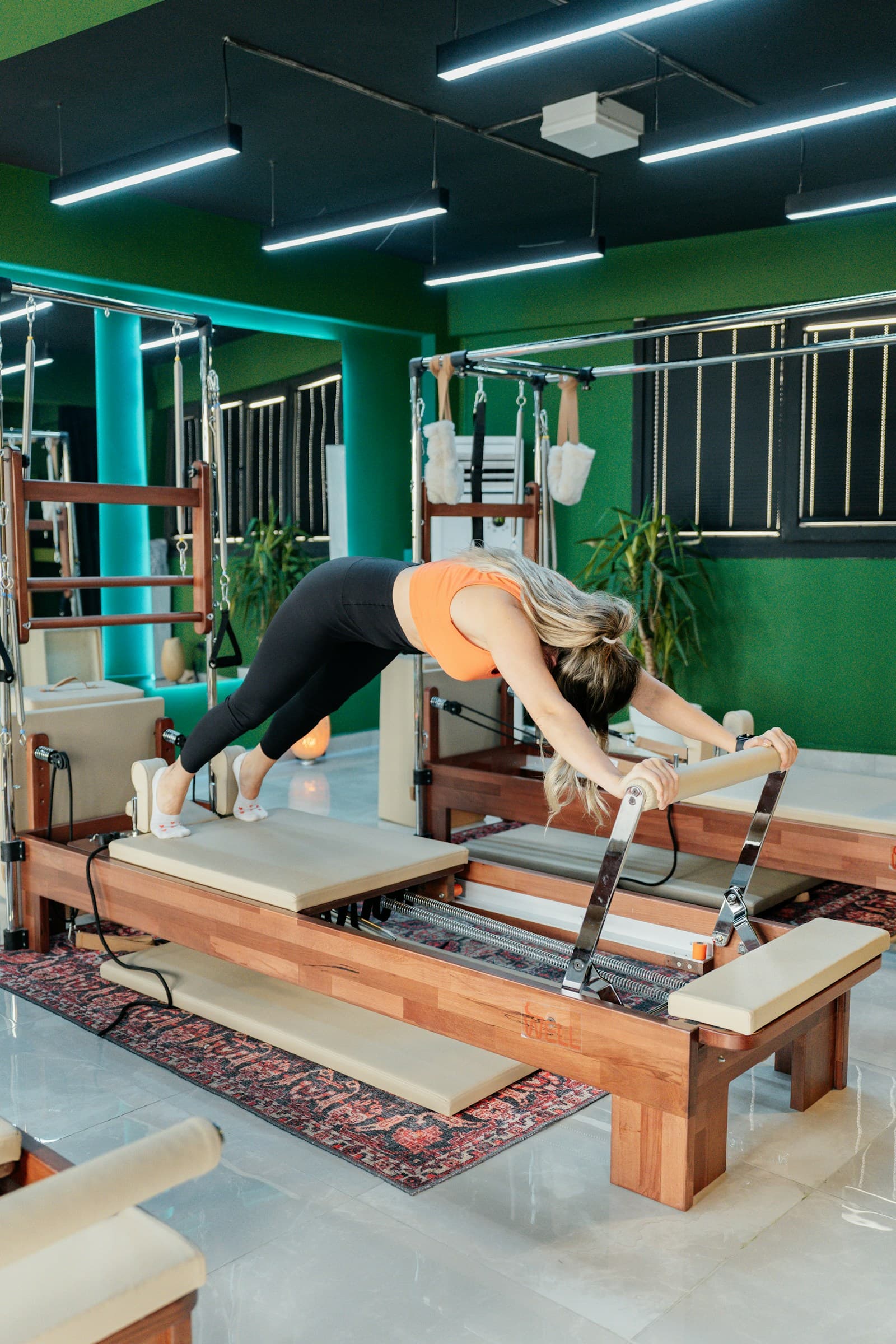
Pilates Instructor Pay: Per Class, Per Head, or Revenue Share?
Three pay structures compared with real numbers, tax implications, and retention outcomes.

Yoga Studio Software Hub: Booking Platforms, Reviews, and Comparison Guides
Every yoga studio software guide organized for studio owners — platform reviews, feature comparisons, and the workflow considerations specific to yoga businesses.