Dance Studio Software for Tuition Billing and Recital Tickets
How dance studio software with recital ticketing handles autopay tuition, declined cards, ticket fees and seat caps, with numbers studio owners can use.
Dance studio software with recital ticketing works best under one rule: every dollar a family owes sits on a single account, on autopay, with a due date. Tuition, costume deposits, recital fees and tickets all post there. The sections below cover the procedures that make the rule hold from September to June.
TL;DR
- Run tuition autopay on the 1st with retries on the 3rd and 6th, and make one phone call on the 15th for anything still open.
- Offer ACH as the default payment method at enrollment; it costs roughly a third of a card-on-file charge on a typical tuition amount.
- Block recital ticket purchases for any family with an unpaid balance, and set a per-family seat cap for the first week of sales.
What should dance studio software with recital ticketing actually do for billing?
It should hold one account per family, run autopay on a fixed date, post every fee as its own line, and gate ticket sales behind a zero balance.
That last item is the piece most owners miss when shopping for software. Recital ticket sales are the single strongest lever a studio has for collecting old balances. When a parent who owes February and March tuition goes to buy six seats for grandma and the aunts, and the checkout says "please settle your balance to continue," the balance gets settled that day. Studios that sell tickets on a separate platform give that lever away.
The billing side needs four things. First, family-level accounts, not student-level ones, because a family with three dancers pays one invoice. Second, a posting calendar you can set once in August: tuition monthly, costume deposit in October, costume balance in January, recital fee in March. Third, automatic retries with a rule you control. Fourth, a portal where the parent updates their own card at 10 pm without calling the desk.
If you are evaluating a switch, the checklist in the guide to switching dance studio software covers the data migration side. This post is about what to do with the software once it is running.
How should you set up autopay so tuition actually collects on the 1st?
Make autopay mandatory at enrollment, charge on the 1st of the month for that month, and require a payment method on file before the first class.
The enrollment form is where collection is won or lost. A studio that lets families "pay at the desk" in September will still be chasing a handful of them in November. The fix is a hard rule: registration is not complete until a card or bank account is saved. Families who object are usually the same families who paid late last year, and a firm policy at the start of the season is far easier than a firm conversation in the spring.
Charge for the month ahead on the 1st, not in arrears. If a family withdraws on the 20th, you already have that month. Post the charge at 6 am so declines show up during the working day.
Run three tiers of tuition on the same calendar: full-season monthly, a 10-month plan with September and June split across the other months, and a paid-in-full option in August with a modest discount. The pricing logic for each is laid out in the post on dance class pricing. The billing logic is simpler: all three post to the same ledger, on the same date, with the same retry rules.
What do card and ACH fees really cost a studio each month?
Card-on-file charges cost more than three times what ACH costs on a typical tuition line, and the difference compounds across a full season.
Studios rarely see this cost because it is deducted before the money lands. Square's published fee page lists card on file at 3.5% plus 15 cents per transaction and ACH bank transfer at 1% with a $1 minimum. On a $150 monthly tuition, the card charge costs $5.40 and the ACH charge costs $1.50. Across 150 families for 10 months, that is $8,100 in card fees versus $2,250 in ACH fees, a $5,850 difference that most owners never look at.
ACH has two real costs that are not fees. Stripe's ACH Direct Debit documentation states that standard settlement takes up to four business days, and that a customer can dispute a debit for up to 60 calendar days, with ACH disputes not open to contest by the merchant. In practice, a studio running ACH on the 1st sees the money by the 5th or 6th, which is fine if you planned for it and painful if payroll runs on the 3rd.
How do you handle declined cards without chasing parents all season?
Use a fixed decline ladder: automatic retries on the 3rd and 6th, a text on the 7th, a phone call on the 15th, and a class hold on the 20th.
The ladder matters because a decline is almost never a refusal to pay. It is a replaced card, an expired date, or a bank fraud flag. Zatrovo studios, 2026: the large majority of failed tuition charges that are retried within a week clear on the retry with no staff contact. The families who need a human are the small remainder, and they need a call, not a fourth email.
Bank payments follow different rules. Stripe's documentation notes that network rules limit retries of a failed ACH debit to two attempts. So for ACH failures, skip straight to the text on the day the return posts and ask the parent to add a card as a backup.
Two details make the ladder work. First, the text message must include the portal link, because a parent standing in a school pickup line will fix the card in 90 seconds if the link is in front of them. Second, the class hold on the 20th is a real hold. The student sits out until the balance clears. Studios that skip this step train families to ignore the earlier steps. The front desk scripts for these conversations belong in your front desk training so a new hire handles the 15th-of-the-month call the same way the owner would.
How should recital tickets be sold: general platform, studio software, or paper?
Sell through your studio software when the ledger link matters more than a seat map, and through a general platform only when you need reserved seating in a large house.
Paper tickets at the front desk still exist at studios that have not run the numbers. They cost staff hours, they produce no per-student sales data, and they make the balance gate impossible. Every studio should retire them.
The real decision is between built-in ticketing and a general platform such as Eventbrite. The general platform wins on seat maps for a 1,200-seat civic theater. It loses on cost and on data. Eventbrite's pricing page lists a 3.7% plus $1.79 service fee per paid ticket and a 2.9% payment processing fee per order. On a $20 ticket sold one per order, that is $0.74 plus $1.79 plus $0.58, or $3.11 per ticket, which is over 15% of the ticket price. Passing that fee to the buyer keeps the studio whole but raises the checkout price to over $23, and parents notice.
Built-in ticketing ties each purchase to a family account. That gives you three things a general platform cannot: the balance gate, a per-student count of tickets sold, and one year-end report showing what each family paid across tuition, costumes, fees and seats. For the full production timeline, from venue contract to show day, the recital planning guide walks through the calendar week by week.
How do you price recital tickets and set seat limits?
Price to cover fixed show costs at two to three tickets per performer, cap seats per family for the first sales week, and lift the cap after that.
Start from the venue math, not from what the studio down the road charges. List every fixed cost of the show: venue rental, lighting and sound tech, backdrop, printed programs, custodial, insurance rider. Divide by expected paid seats. Then check that the resulting price does not exceed what a family of five can afford twice, because many families attend both shows.
Worked example: a studio with 160 performers budgets $6,400 in fixed recital costs ($3,600 two-day venue rental, $1,400 lighting and sound tech, $800 backdrop and programs, $600 custodial and insurance rider). At a $20 ticket sold through a general platform with fees absorbed, using Eventbrite's published rates and treating each ticket as its own order to keep the arithmetic simple, the fee is 3.7% of $20 ($0.74) plus $1.79 plus 2.9% processing ($0.58), so the studio nets $20.00 minus $3.11, or $16.89 per ticket. Break-even is $6,400 divided by $16.89, which is 379 tickets. At 2.4 tickets per performer the studio expects 160 times 2.4, or 384 tickets, so the show barely covers itself and every seat above 379 is margin.
That example is why most studios either pass fees to the buyer or sell through software that charges them less. It is also why the seat cap exists. Without a cap, twelve large families buy eight seats each on the first morning, and the parents who work day shifts find the good sections gone. A cap of four to six seats for seven days, then no cap, is the common compromise.
How do costume orders and recital fees fit into the billing calendar?
Bill the costume deposit before the vendor order goes in, the costume balance when boxes ship, and the recital fee at least eight weeks before the show.
Costume money is the fee families resent most, so timing and transparency matter. Post the deposit in October or early November, at roughly half the expected cost, with the vendor name and the reason on the invoice line. When the order ships in January, post the balance. A family that withdraws in December owes the deposit because the order was placed, and the invoice line says so, which ends the argument before it starts.
Recital fees cover the venue and tech. Post them in February or March as a separate line, not as a tuition increase. Families who see "March tuition $270" call the desk. Families who see "March tuition $150, recital fee $45, costume balance $75" pay. The difference is entirely presentation, and the software does it for free.
One counterintuitive rule: bill costume balances and recital fees on the 1st, on the same autopay run as tuition. Owners often spread them to the 15th to "be nice" and end up with two decline ladders running at once and a front desk that cannot tell which line a partial payment covered. One run, one ladder, one ledger.
What reports should you check every Monday?
Open three numbers each Monday morning: total open balances over 14 days, autopay methods expiring within 30 days, and tickets sold per performer once sales open.
The open-balance report is the one that pays for the software. Sort by age, not by amount. A $45 recital fee that is 20 days late is a family drifting away, and it costs more in the long run than a $300 tuition line that is three days late because of a card swap.
The expiring-methods report is the one nobody runs. Cards expire at the end of the month printed on them. If the desk texts families whose cards expire in October during the last week of September, the November decline list is half as long. Fifteen minutes on a Monday saves hours in November.
The tickets-per-performer report replaces the announcement in class. Instead of "remember to buy tickets," the desk pulls the list of performers whose families have bought zero seats ten days before the show and sends each one a direct message. Those families are almost always the ones who did not know sales had opened.
What should you check before switching billing software mid-season?
Do not switch autopay providers between September and June unless the current one is failing outright, and never within eight weeks of a recital.
The reason is card data. Stored payment methods usually do not transfer between processors, so every family has to re-enter a card or bank account. In August, that is one line on the enrollment form. In February, it is 150 phone calls and a month of declines. Owners who switch in the spring "to be ready for next season" often spend the recital weeks fixing billing instead of running a show.
If you must switch, run both systems in parallel for one billing cycle. Post March tuition in the old system, collect new payment methods through the new portal during March, and make April the first live run. Announce the change three times: an email, a text with the portal link, and a printed half-sheet at the desk.
The dance industry is large and fragmented. IBISWorld estimates roughly 14,600 dance studios in the US as of 2025, and most are small, owner-run businesses where the owner is also the billing department. That is exactly the operator whose season a badly timed switch can ruin, and exactly the operator who benefits most from getting the calendar right once. The wider collection of guides for running a dance studio covers scheduling, pricing, hiring and marketing alongside billing.
Run your studio on Zatrovo
Tuition autopay, costume and recital fees, and ticket sales on one family ledger, with the balance gate built in.

We write playbooks for studio operators — based on data from thousands of studios running on Zatrovo across pilates, yoga, lash, nail, massage, salon, dance, and fitness.
Related reading

Switching Dance Studio Software Without Losing Enrollment History
A migration checklist that preserves student records, enrollment history, and recurring tuition during a dance studio software switch.

Dance Studio Booking Software: 7 Features That Simplify Recital Season Registration
The booking and registration features that handle peak enrollment periods — recital sign-ups, costume ordering, competition scheduling.
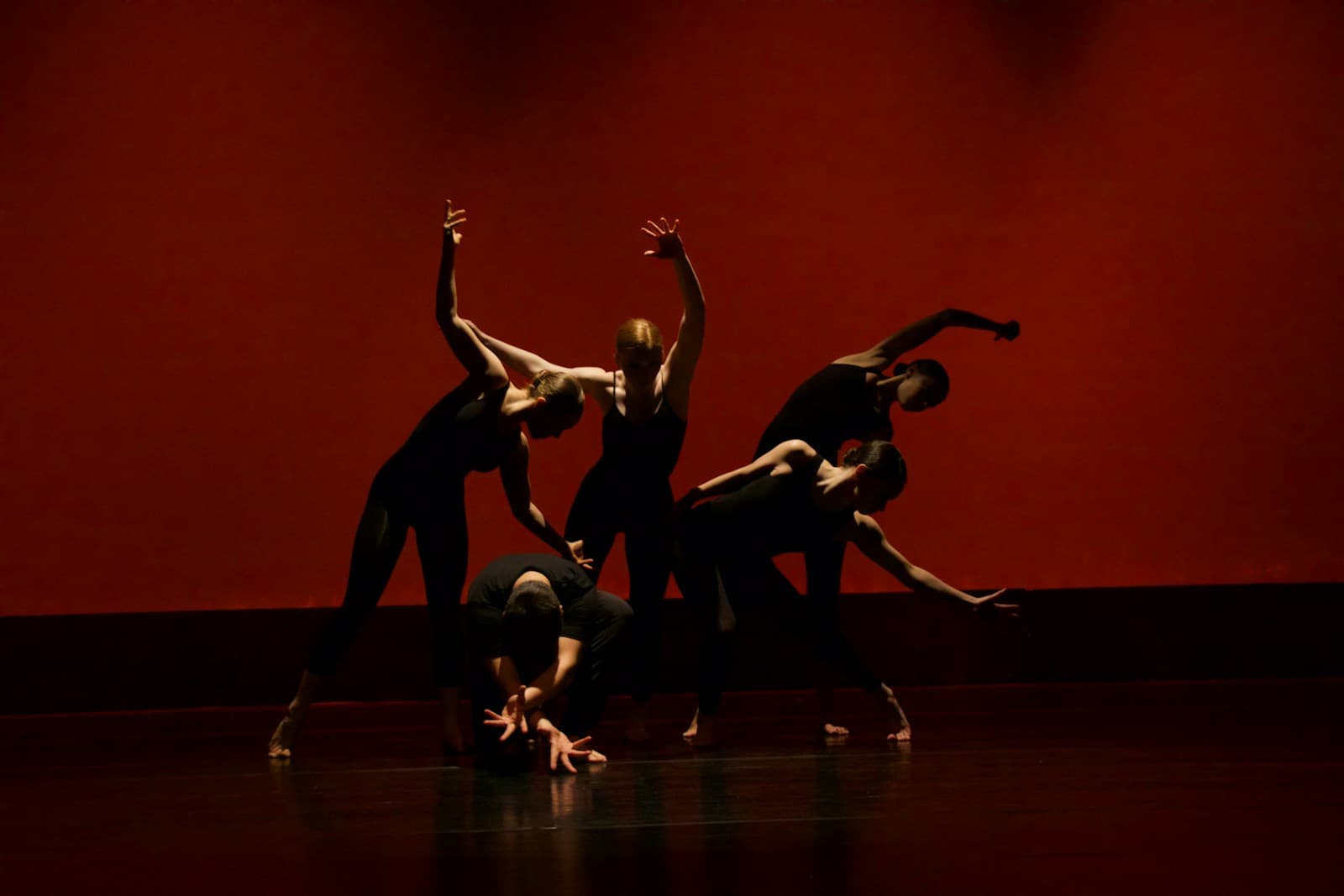
Dance Recital Planning: The 12-Week Timeline That Removes Last-Minute Chaos
A 12-week production timeline for dance studio recitals — from venue booking to costume deadline to tech rehearsal.