Pilates Booking Software: 12 Features Studios Actually Need
The 12 capabilities that matter for a pilates studio — and the ones that are marketing noise.

Pilates studios have specific operational needs that general booking platforms weren't built for: small-capacity reformer classes, equipment assignment, late-cancel enforcement on premium-priced sessions, and pack structures that work across private and group formats. These 12 features are the ones that drive day-to-day operations — not the marketing page checkboxes.
Why Do Generic Booking Platforms Fail Pilates Studios?
Generic appointment booking tools are built around a single service provider with a personal calendar. Pilates studios run multi-instructor, multi-format operations with equipment constraints.
The mismatch shows up fast. A yoga booking tool built around class sizes of 20–30 doesn't handle 6-person reformer sessions with assigned beds. An appointment tool built for massage therapists doesn't handle a timetable of 40 recurring classes per week across three room types. Feature lists look identical; operational fit is not.
Feature 1: Reformer Bed Assignment
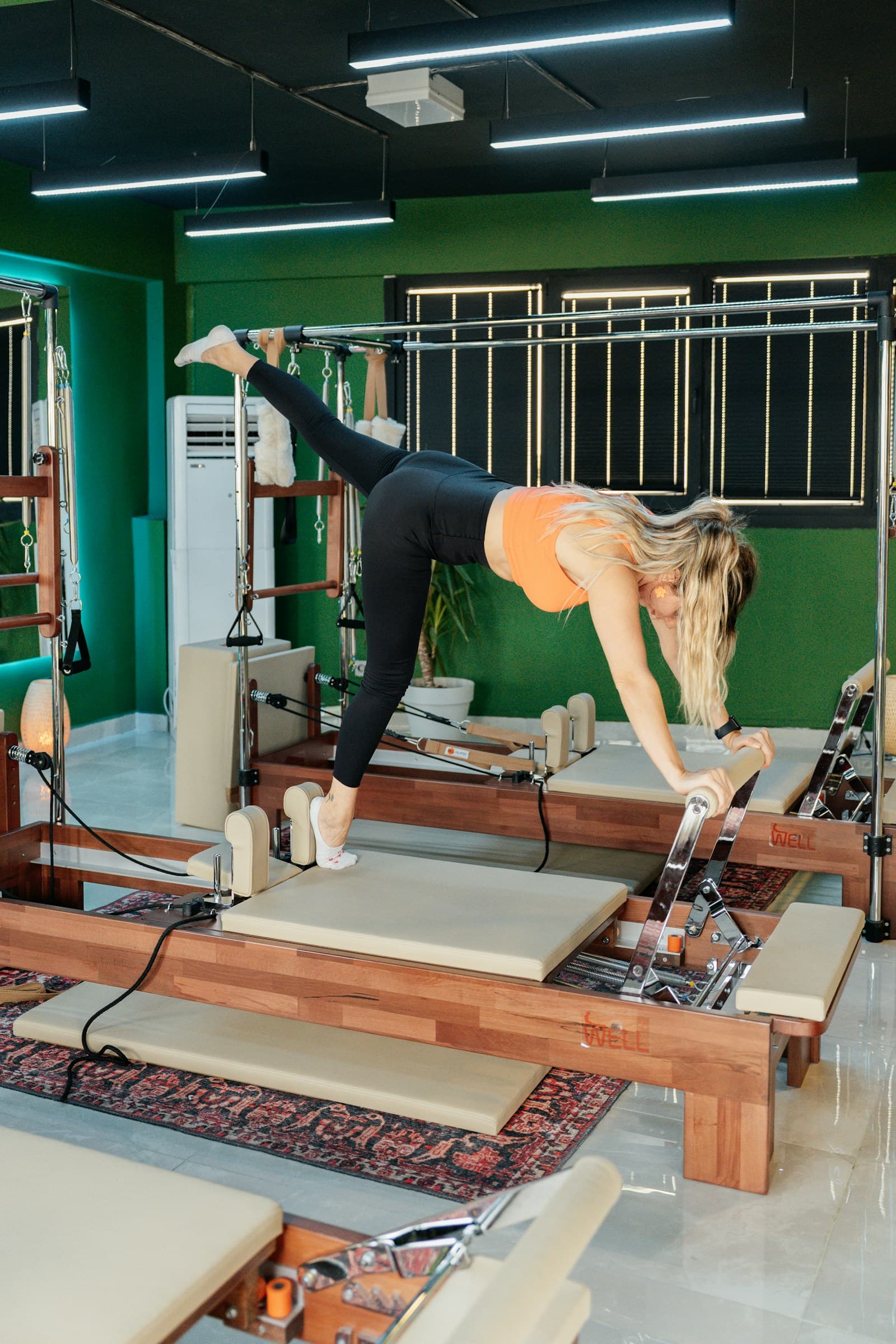
The ability to assign specific reformer beds to specific bookings and track client preferences over time. Clients develop strong preferences — bed 2 near the window, the bed with lighter springs — and losing that preference data increases no-shows and reduces booking confidence.
Platforms that handle this well: bed assignment is native, shows on the booking confirmation, and lets returning clients select their preferred bed. Platforms that don't: "bed assignment" means manually noting it in an admin field with no client-facing communication.
Feature 2: Waitlist Auto-Promotion
When a cancellation opens a spot, the next person on the waitlist is notified via SMS within 60 seconds — automatically, without staff involvement. They have a time-limited window (typically 15–30 minutes) to claim the spot before it goes to the next person.
Manual waitlist management is not equivalent. Staff calling down a list fills under 20% of spots. Auto-promotion fills 50–70%.
Feature 3: Class Pack Management With Type Restrictions
Pack credits that track which class types they apply to. A "10-class reformer pack" should not be redeemable at mat classes — and your software should enforce that automatically at booking, not require staff to check.
Most generic tools have simple session-count packages with no type restriction. This works for solo practitioners. It breaks in a multi-format studio where reformer packs, mat packs, and private session packages carry different prices and margins.
Feature 4: Native Membership With Freeze and Pause
Recurring membership billing with configurable freeze and pause options that clients can self-serve within defined limits. A member going on vacation for 3 weeks should not require a support ticket — they should be able to pause within a defined policy window from the member portal.
Platforms that handle this well also enforce the limits: a policy allowing one freeze per year of up to 30 days is actually enforced, not just a note in a terms document. For the full membership structure guide, see the profitable pilates studio playbook.
Feature 5: Late-Cancel Fee Automation
Automatic late-cancel fee application when a cancellation falls inside your policy window. Not a staff action — an automatic charge to the card on file, or a credit forfeit from the pack.
This is one of the highest-value features in pilates software because it enforces your cancellation policy without requiring staff confrontation. Studios that auto-enforce see consistent policy compliance within 3–4 weeks of implementation. Studios that leave it to staff discretion never have a real policy.
Feature 6: Recurring Class Timetable
A weekly schedule with recurring class types, instructor assignments, and room assignments — not a calendar of individual appointment slots. Clients should see "Monday 9am Reformer Intermediate" as a class on a timetable, not a booking slot identical to a massage appointment.
This matters for client retention: regular clients think of their pilates schedule as "my Monday reformer class," not "an appointment on Monday." Timetable-style booking reinforces the class identity and routine.
Feature 7: Instructor Assignment and Sub Tracking
Class instances that are assigned to specific instructors with the ability to substitute without losing booking history. When an instructor calls in sick, the sub feature should: replace the instructor on the booking confirmation, optionally notify booked clients of the change, and log the substitution for payroll purposes.
Platforms that handle this as a manual admin action — editing the class type to change the instructor name — require staff to notify clients individually and leave no audit trail for payroll.
Feature 8: Attendance Tracking and No-Show Marking
Per-session check-in and no-show marking that feeds into client records and reporting. You need to know: which clients attended, which cancelled inside the window, which were no-shows, and which did not attend for the third week in a row.
The third-week data triggers automated re-engagement. The no-show data triggers your late-cancel policy. The overall attendance data feeds class-level profitability reporting.
Feature 9: Private Session Scheduling With Client Notes
1:1 private session booking with client notes that persist across instructors. The note should capture: physical restrictions, current program phase, spring preferences, progress goals, and any instructor observations from the last session.
This is the instructor handoff problem. Without persistent client notes, every instructor starts from scratch. With them, a client can see a different instructor and feel continuity. See the pilates studio operations checklist for the full handoff SOP.
Feature 10: Pack Expiration and Renewal Automation
Pack credits that expire on a configurable schedule (30, 60, 90 days) with automated renewal prompts. The renewal email goes out 7–10 days before expiry with a one-click purchase link.
The expiry window also matters for your business: packs that don't expire create deferred liability on your balance sheet. Packs that expire in 90 days close that liability on a clear timeline.
Feature 11: Revenue and Attendance Reporting by Class Type
Separate reporting for reformer vs mat vs semi-private vs private. You need to know whether reformer classes are filling at 80% and mat classes at 40%, so you can reallocate schedule slots or adjust pricing. A single blended attendance report hides those differences.
Feature 12: Multi-Location Support for Growing Studios
If you are planning a second location, confirm that your platform handles multi-location without requiring a separate account. Specifically: shared client records, cross-location pack redemption, per-location reporting, and staff management by location.
Most single-studio platforms bolt on multi-location as an afterthought. A studio operator who signs a second lease and then discovers their software requires two separate systems with no shared client data faces a painful mid-growth migration.
For a full overview of pilates studio software options, see the pilates studio software hub. For the migration checklist if you're switching platforms, see switching pilates studio software.
Platforms commonly used in the pilates market include Mindbody, Mariana Tek, Arketa, and Walla. Each handles these 12 features to varying degrees. Evaluate against your specific workflow before committing.
Run your studio on Zatrovo
Pilates-specific booking, packs, memberships, and attendance in one platform.

We write playbooks for studio operators — based on data from thousands of studios running on Zatrovo across pilates, yoga, lash, nail, massage, salon, dance, and fitness.
Related reading

Switching Pilates Studio Software: Migration Checklist
The 28-point migration checklist for switching pilates studio software without losing a client.
Pilates Studio Software Hub: Reviews and Comparisons for Studio Owners
Every pilates studio software guide in one place — booking platform reviews, feature comparisons, and the decision framework for choosing the right system.

Pilates Studio Software: Reformer Scheduling and Membership Tools
A practical guide to pilates studio software: how to schedule reformer beds, run waitlists, price memberships, and cut no-shows without losing clients.