How Many Reformers Do You Need? Capacity Math for New Studios
How many reformers for a pilates studio? Use the Three Ceilings Method to size your room by floor space, instructor cueing limits and peak demand.
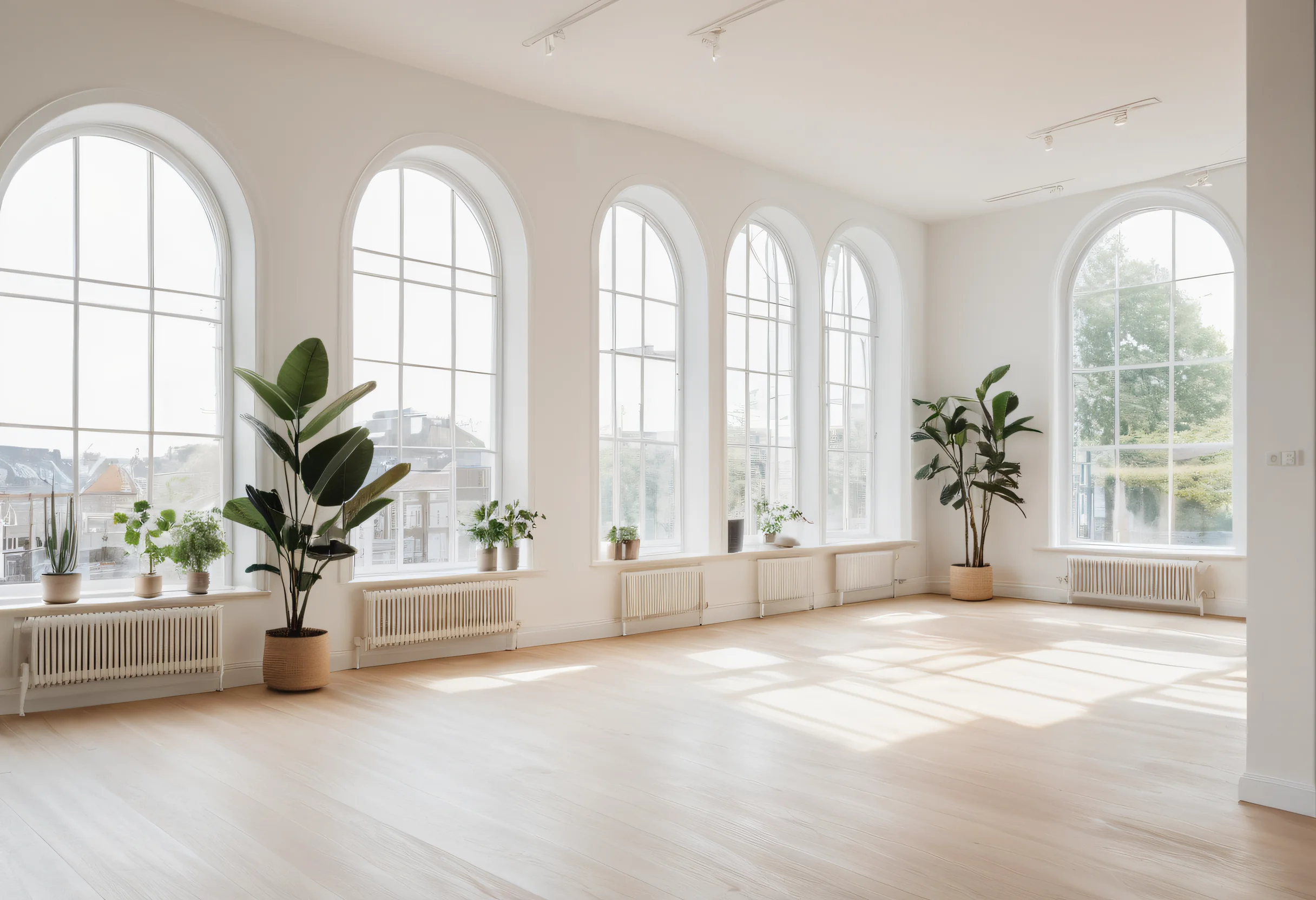
Use the Three Ceilings Method. Your reformer count is the lowest of three limits: how many frames the floor fits, how many bodies one instructor can safely cue, and how many bookings your peak slots fill. In many new studios the instructor ceiling binds first. Buy for the room you can teach, not the room you leased.
What is the Three Ceilings Method for reformer count?
It caps your reformer count at the lowest of three numbers: what the floor fits, what one instructor can cue, and what peak demand fills.
Most owners only calculate the first one. The landlord sends a floor plan, the owner divides the square footage, and the order goes in. Then the 6:30pm class has 14 frames and an instructor who can't see the back row.
Run all three numbers. Write each one on the whiteboard in the empty unit. Buy the smallest. Then lay out the room for the largest, so you can grow later without moving mirrors or electrical.
How much floor space does each reformer really take?
Plan around 50 square feet of teaching floor per reformer once you add the gaps, the aisle, and the instructor's walking lane.
Spec-sheet footprints mislead because they only measure the frame. Here's a worked example with a hypothetical frame 8 feet long and 27 inches wide. Swap in your own model's numbers.
- Width: 27 inches of frame plus 30 inches of gap, so an instructor can kneel at a client's shoulder to fix a strap. That's 57 inches, or about 4.75 feet.
- Length: 8 feet of frame, plus 1 foot at the wall, plus half of a shared center aisle. That's about 10.5 feet.
- Station: 4.75 x 10.5 ≈ 50 square feet.
Make that center aisle at least 36 inches. That is the minimum clear width for walking surfaces in section 403.5.1 of the 2010 ADA Standards. It is also the path your instructor walks dozens of times a class.
Next, subtract everything that isn't teaching floor: the lobby, cubbies, restroom, the storage closet for jump boards and boxes, and the instructor's demo spot. Take a 1,000 square foot unit with one restroom and a closet. It might keep 600 square feet of teaching floor. 600 ÷ 50 gives a floor ceiling of 12, for example as two rows of six facing each other across the aisle.
How many clients can one instructor safely cue on reformers?
Fewer than the floor holds. Test it: time how long your instructor takes to check every client's springs during a transition, then cap there.
We call this the Spring Check Test. Fill the room with staff and friends. Have the instructor teach footwork into bridging, which needs a spring change. Start a stopwatch when they call the change. Stop it when they have visually confirmed every carriage. If that takes more than 60 seconds, the room is too big for that teacher. Remove two frames and run it again.
Test every instructor you hire. You don't need one cap for the whole studio. Your booking system can publish 10 spots in a newer teacher's class and 12 in your lead's. Whether you can require this kind of rehearsal can depend on how you classify teachers, which our 1099 vs W-2 breakdown for fitness instructors covers.
How do you work out the demand ceiling before you open?
Size for your busiest weekly slots, not your weekly average. Peak demand, usually early morning and early evening, decides whether clients see waitlists.
This is Peak Slot Math. Say your presale brings in 120 founding members, and each plans to come twice a week. That's 240 bookings. Twenty-five classes a week on 10 reformers gives 250 seats, so on paper you're 96% full.
Now suppose 60% of those bookings want your 10 peak slots. That's 144 bookings across 10 slots, or about 14 people chasing 10 frames every peak class. The weekly average says you're fine. Your 6am regulars will say otherwise.
Measure this before you open. Ask for each person's preferred time at presale checkout. Count people who started checkout and didn't finish as soft demand, and follow up using abandoned checkout recovery. How you structure the founding offer also affects how often members actually come, which is covered in annual vs monthly membership.
Should you buy for opening day or for month twelve?
Buy for the peak demand you can prove by month six, but wire, mirror, and lay out the room for your full floor ceiling.
Before the flooring goes down, tape all 12 footprints on the floor. Mount the mirrors and speakers for the 12-frame layout. Then order 10. Adding two frames later is a delivery. Moving a mirror wall is a renovation.
There is a less obvious reason not to overbuy. Four clients on 12 frames looks like a studio in trouble, and your Instagram stories show it. Eight clients on 10 frames looks busy.
How does reformer count change your per-class economics?
When teachers are paid per class, each extra full reformer is nearly pure contribution, right up until the instructor ceiling breaks quality.
Illustrative math: a $50 instructor fee and $30 average revenue per booked spot. Eight full frames bring in $240, or $190 after the instructor. Twelve full frames bring in $360, or $310. Same teacher, same 55 minutes, $120 more.
The catch: panelists in Club Solutions' reformer report noted that reformers are expensive to buy and maintain. The return on reformer space depends on how often frames are used and how long members stay. An empty frame earns nothing and still needs new ropes.
Do you need a spare reformer or a separate private-session machine?
Yes to a spare. Publish one fewer spot than you own for the first 90 days, so a broken rope never cancels a paid booking.
Do the check every Monday at 5:15am, before the first class. Look for frayed ropes, make sure springs are seated, and test the carriage wheels and headrest. Tag out any frame that fails. Without a spare, you're texting a client at 5:40am to cancel, and that is the client who doesn't rebook. After 90 days, open the spare on peak slots only.
A private-session frame in a side room does something different. It lets you sell intro privates while a group class is running. That matters because, as one studio owner on the same Club Solutions panel put it, many consumers buy after two to three sessions.
When should you add more reformers?
Add a class before you add a frame. Add frames only when peak slots keep waitlisting and you cannot open another time slot.
Use the 3x3 Trigger: three peak slots, each with a waitlist of three or more, for three straight weeks. Start with a 5:00am or 7:15pm class. It costs you one instructor fee and no equipment. Buy frames only when you can't staff another slot. Even then, stay within your floor and instructor ceilings.
Check two things first. Do waitlisted clients actually take the alternative times you offer them? If not, they want that time slot, not more frames. And is the 6pm full because members stay, or because you keep replacing the ones who leave? The Club Solutions panel flagged attrition as a number operators should watch closely. At-risk member detection shows how to spot it early.
What do new owners get wrong about reformer count?
They size the teaching room and forget the lobby. Every class changeover puts two full classes in your entry space at once.
With 12 frames and a 15-minute changeover, 24 people pass the front desk: 12 leaving, 12 arriving, shoes off, grip socks on. You need cubbies for 24, not 12, plus a check-in that doesn't depend on someone standing at the desk.
Budget three to four minutes to wipe down the carriage, footbar and straps. Have outgoing clients wipe their own frame, so the instructor can reset springs for the next class.
The other common mistake is buying 10 because an even number looks better in the mirror, when your math said nine.
Run your studio on Zatrovo
Set booking caps per instructor and run waitlists that match the reformers you actually own.

We write playbooks for studio operators — based on data from thousands of studios running on Zatrovo across pilates, yoga, lash, nail, massage, salon, dance, and fitness.
Related reading
Reformer Pilates Franchise vs Independent: Costs Compared
Reformer Pilates franchise vs independent cost, broken down: franchise fees, royalties, equipment pricing, and the revenue math owners should run first.
Reformer Pilates Studio Startup Costs: Equipment and Buildout
Reformer Pilates studio startup costs broken down by equipment, buildout, and the first 90 days, with the numbers owners use to size the budget.
How Many Reformers Fit in a 1,200 Sq Ft Studio?
How many reformers do I need in a 1,200 sq ft studio? Use the 5-by-10 bay rule, subtract front-of-house space, and plan for 8 to 12 reformers.