Reformer Pilates Studio Startup Costs: Equipment and Buildout
Reformer Pilates studio startup costs broken down by equipment, buildout, and the first 90 days, with the numbers owners use to size the budget.
Reformer Pilates studio startup costs split into three buckets: machines, walls, and runway. Machines are the reformers and accessories, priced per fully accessorized machine and multiplied by the opening count. Walls are the buildout. Runway is the cash that carries rent and payroll until classes fill. Owners who underfund the third bucket are the ones who close.
TL;DR
- Price reformers per machine including box, platform extender, and spare springs, then multiply by eight, not four.
- Walk the space with a tape measure and a 36 inch aisle rule before you sign anything.
- Hold three months of fixed costs in cash on opening day, separate from the equipment and buildout budget.
What does a reformer Pilates studio cost to open?
The total depends on machine count, lease condition, and city, so the useful answer is a method for building your own number, not a national average.
Start with the three buckets and work backwards from the room. The machines bucket is the easiest to price because manufacturers publish or quote list prices. The walls bucket swings the most, because a former yoga studio with mirrors, a sprung floor, and a restroom already in place costs a fraction of a raw retail shell. The runway bucket is the one owners skip, and it is the one that decides whether the studio survives a slow February.
Demand is not the problem. The Health & Fitness Association's consumer report counted a record 81 million Americans belonging to a gym, studio, or other fitness facility in 2025, and its member tracking put Pilates participation above 8% of facility members. The problem is that reformer studios have a high fixed cost per seat, so the budget has to be sized to the room you can fill. If you are still deciding whether to open at all, the broader guide to opening a Pilates studio covers the licensing and location questions this post assumes you have answered.
How much should you budget for reformers?
Budget per machine, fully accessorized, then multiply by your opening count. The sticker price of the reformer alone understates the real cost by a wide margin.
Merrithew publishes list prices on its own store, which makes it the cleanest benchmark. At the time of writing the SPX Max reformer lists at about $3,650 and the V2 Max Plus at about $7,900. Balanced Body, the other manufacturer most US studios shortlist, prices its Allegro 2 and Studio Reformer by configuration, and an accessorized quote for eight matching machines comes through a regional rep, so that conversation should start before you sign a lease.
Then add what every group class uses. A sitting box, a padded platform extender, a jumpboard for the athletic classes that sell out, and a spare spring set per machine so a snapped spring on a Tuesday night does not take a carriage offline until the next delivery. Studios that skip the spare springs discover the lead time the hard way.
Which reformer should a new studio buy?
Buy the machine your instructors already know how to teach on, at the tier your class format needs. Brand loyalty matters less than instructor fluency and spring feel.
Most group reformer studios do not need a tower on every machine. A vertical frame roughly doubles the per-unit price, and in a 50 minute group class the frame is used for maybe two exercises. The typical winning layout is one or two tower-equipped machines near the wall for privates and a row of standard reformers for group work. That keeps the equipment bucket manageable and still lets the studio sell private sessions at a premium.
Instructor familiarity is the counterintuitive part. If the three instructors you plan to hire trained on Balanced Body, and you buy Merrithew because a rep offered a package discount, expect the first month of classes to feel clumsy as they relearn spring colors, footbar positions, and rope lengths in front of paying clients. Ask every instructor candidate which equipment they certified on before the machines are ordered. The hiring guide for Pilates instructors covers the rest of that interview.
How many reformers fit in your space?
Measure the room against a real reformer footprint plus a real aisle, not against a square-footage rule of thumb from a listing.
A full-length machine like the V2 Max Plus is 100.5 inches long and 29.25 inches wide per Merrithew's product page. Clients need to step off the side of the carriage, kneel beside it for box work, and stand at the footbar end for standing series. That means a working envelope closer to 8.5 feet by 6 feet per machine, or 65 to 75 square feet, before the instructor lane.
Aisles have a legal floor as well as a practical one. The US Access Board's guide to the ADA Standards states that the continuous clear width of an accessible route must be at least 36 inches, narrowing to 32 inches only for short distances such as doorways. Inspectors measure from the machine edge, not the wall, so a layout that looks generous on paper fails when the reformers are on the floor.
The repeatable procedure is to tape the floor. Buy painter's tape, mark every reformer outline at full size, mark the 36 inch aisle beside each, then walk it carrying a box. If you cannot pass another person in the aisle with a box in your arms, the room is one machine too many.
What does the buildout cost beyond the machines?
Buildout cost is set by what the previous tenant left behind. A second-generation fitness space can cost a fraction of a raw shell.
The items that cost real money in a reformer studio, in rough order of pain, are the floor, the restroom, the electrical, and the sound. Reformers sit on a hard, level floor. Carpet is out, and a badly poured slab shows up as one carriage that always drifts. Rubber tile or luxury vinyl over a leveled subfloor is the common answer. A restroom that already meets accessibility requirements saves the single most expensive plumbing job most owners face. Electrical needs are modest, mostly lighting and HVAC, but a raw shell without a dedicated HVAC unit is an expensive surprise, because a room of eight people doing jumpboard gets warm fast.
Sound gets forgotten until the first class. Reformers are quiet, but instructors cue over music for 50 minutes, and a bare room with a glass front bounces every word. Acoustic panels are cheap relative to everything else on this list and the instructors will thank you.
Negotiate a tenant improvement allowance before you negotiate rent. Landlords with vacant retail are often more willing to fund buildout than to cut the monthly number, and buildout money is spent once while rent is paid for five years.
What hidden costs catch first-time owners?
The costs that hurt are the ones that arrive between signing the lease and teaching the first paid class, when there is no revenue at all.
Shipping and freight on reformers is charged per machine and often quoted separately from the list price. Assembly can take a full day for eight machines with two people who have done it before, and considerably longer if they have not. Manufacturers and reps sometimes offer paid setup, and for a first studio it is worth the money because a mis-set gearbar is a safety problem, not a cosmetic one.
Permits and inspections run on the city's calendar, not yours. Occupancy permits, signage permits, and a fire inspection each have a queue. A two month delay is not unusual, and rent typically starts on key handover, so the runway bucket has to absorb that.
Insurance is the line that owners underprice. General liability, professional liability for the instructors, and equipment coverage for machines that cost more than a used car each. Get quotes before the lease, because some landlords require proof of coverage to hand over keys.
Then the soft costs: teacher training deposits, the first month of studio software, a point of sale terminal, retail stock, cleaning supplies, and a professional photographer for the launch, which is the one marketing expense that pays for itself if the studio plans to lean on Instagram for client acquisition.
How should you finance the equipment and buildout?
Split the financing by what the money buys. Long-lived equipment and buildout go on term debt. Runway sits in cash or an undrawn line of credit.
The SBA 7(a) program is the standard path for a first studio because it lends against exactly this kind of purchase. The SBA's own terms page lists eligible uses that include purchasing and installing machinery and equipment, acquiring furniture, fixtures, and supplies, and improving buildings, with a $5 million maximum that no studio will approach. What makes a bank say yes to a first-time owner is the guarantee: the SBA backs up to 85% of loans of $150,000 or less and up to 75% of loans above $150,000, and equipment terms can run up to 10 years, which keeps the monthly payment proportionate to what eight reformers earn.
Manufacturer and third-party equipment leasing is the alternative. It is faster and needs less paperwork, but the effective rate is usually higher, and at the end of the term the studio may not own machines it has been paying for. Owners who take leasing often do so because the SBA timeline did not fit the lease start date, which is a scheduling failure rather than a financing choice.
Whatever the source, the lender will want a studio business plan with a class schedule, a price list, and a fill-rate assumption. Build that document before the loan application, not during it.
How much runway do you need after opening day?
Three months of fixed costs in cash on opening day is the working minimum. Owners who open with less spend the launch month worrying about payroll instead of teaching.
Fixed costs in a reformer studio are rent, instructor payroll, loan payments, insurance, software, and utilities. Payroll begins before revenue does, because instructors need paid hours on the new machines and the studio runs free preview classes to seed the first membership cohort. The first paid classes are often intro offers priced well below the standard rate, so revenue in month one looks nothing like revenue in month six.
Treat runway as untouchable. It is not the contingency fund for the buildout overrun. It is not the money for the tenth machine. It sits in a separate account and covers the gap while the intro offer converts new clients into members.
Worked example: A studio with 8 reformers charges $38 per drop-in class and runs 6 classes a day, 6 days a week, for 36 classes a week. At a 70% fill rate that is 8 × 0.7 = 5.6 paid seats per class, and 5.6 × $38 = $212.80 per class. Across the week that is 36 × $212.80 = $7,660.80, and over a month (× 52 ÷ 12) it is about $33,197. Against fixed costs of $22,000 a month ($6,500 rent, $9,500 instructor payroll, $2,400 loan payment, $3,600 insurance, software, and utilities), the studio clears roughly $11,197 before owner pay and tax. At a 50% fill rate the same math gives 4 seats × $38 × 36 × 52 ÷ 12 = about $23,712, which barely covers the $22,000, and that is why runway matters until the timetable fills.
How do you price classes to cover the buildout?
Price from the cost per seat-hour, then check it against the market, not the other way around. A reformer studio's economics are set by how many paid seats each machine delivers per week.
Take the fixed cost number from the worked example and divide it by the realistic number of paid seats in a month. With 36 classes a week and 5.6 paid seats per class, that is about 873 paid seats a month, and $22,000 of fixed costs works out to roughly $25 per seat before instructor bonuses, owner pay, and profit. A $38 drop-in rate leaves a margin. A $28 rate does not, no matter how many clients walk in.
That is why memberships and class packs exist. An unlimited membership priced so that the typical member attends two to three times a week lowers the per-visit price for the client while raising the predictable revenue for the studio. The class pack pricing guide works through the split between drop-in, packs, and monthly memberships. The rule that owners learn quickly is that the drop-in rate is a reference price that makes the membership look sensible, not a product most people should buy.
What is the pre-opening checklist that protects the budget?
Sequence the spend so that no dollar goes out before the item that depends on it is confirmed. Order matters more than the total.
Lease, machines, walls, people, runway is the order most owners settle on after one bad experience. Sign the lease only with a tenant improvement allowance and a rent start date tied to permit approval where the landlord will agree to it. Order reformers the same week, and get the delivery window in writing. Start the buildout so that flooring finishes about a week before the machines land. Hire and train instructors in the last three weeks before opening, on the actual machines, and run free preview classes to fill the first month. Open with the runway account untouched.
Every step feeds the next, and the whole sequence collapses if machines arrive into an unfinished room or instructors are paid to wait for a permit. The Pilates studio hub collects the follow-on guides for the months after opening, from the first membership price change to the first instructor hire.
Run your studio on Zatrovo
See fill rate per reformer, per class, from opening week, so you know exactly when machine nine pays for itself.

We write playbooks for studio operators — based on data from thousands of studios running on Zatrovo across pilates, yoga, lash, nail, massage, salon, dance, and fitness.
Related reading
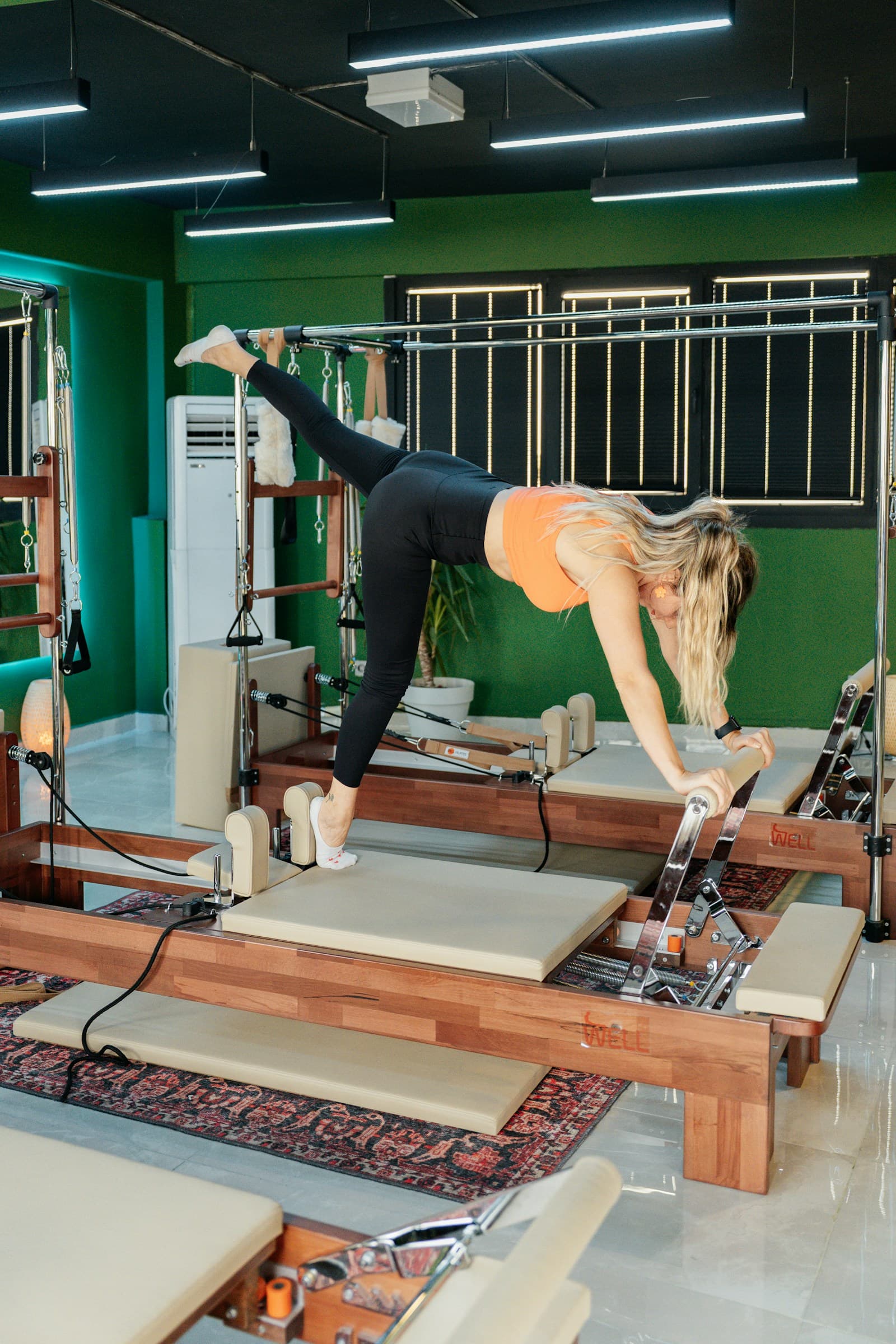
Pilates Studio Business Plan: Real Template with Numbers
A business plan framework with P&L projections for a 12-reformer pilates studio.
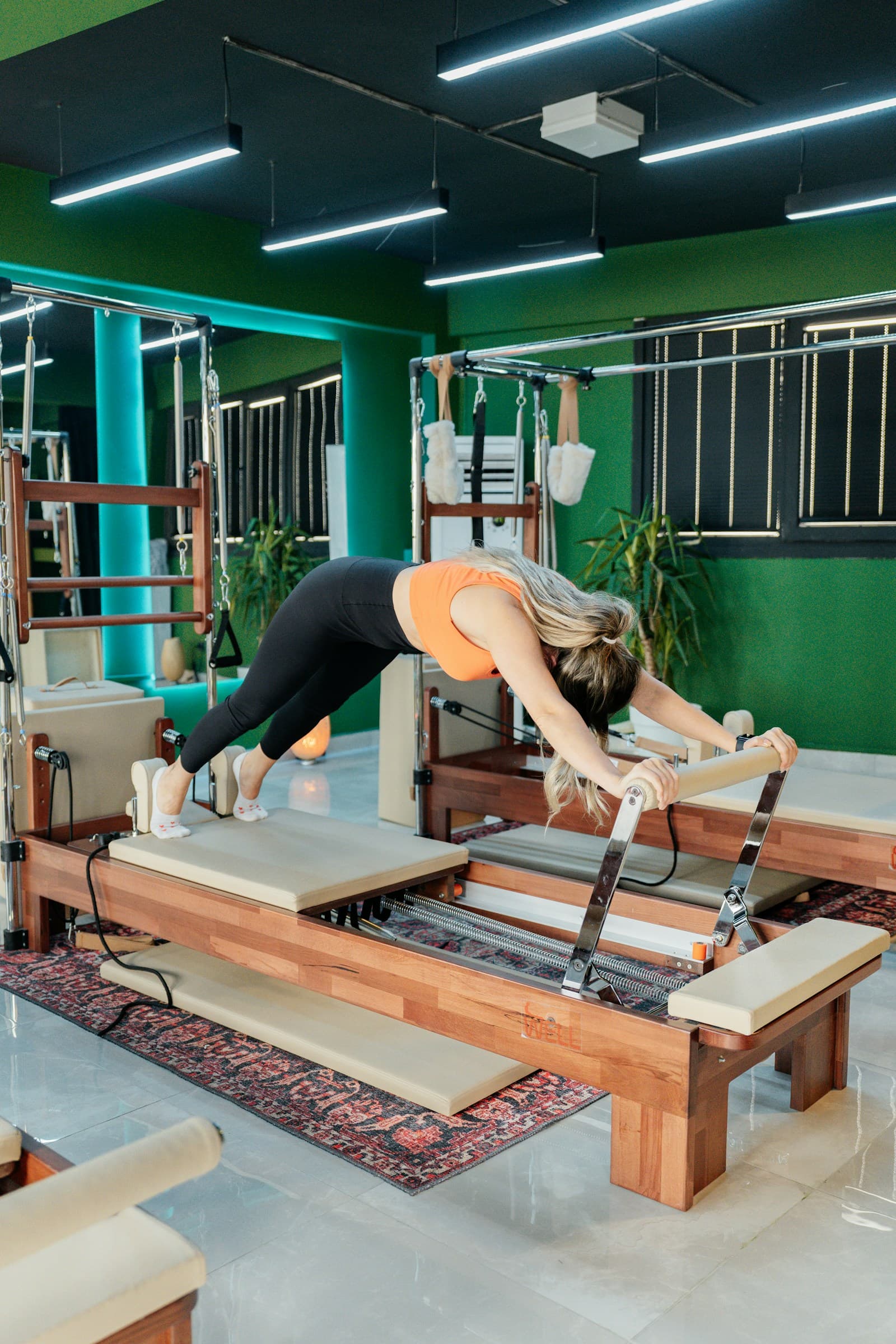
Opening a Pilates Studio: First 90 Days Playbook
Week-by-week launch plan for a pilates studio from lease signing through first profitable month.
Massage Business Plan: Template With Real Clinic Numbers
A business plan format for 1, 3, and 5-room massage clinics — with real P&L numbers.