Reformer Pilates Franchise vs Independent: Costs Compared
Reformer Pilates franchise vs independent cost, broken down: franchise fees, royalties, equipment pricing, and the revenue math owners should run first.
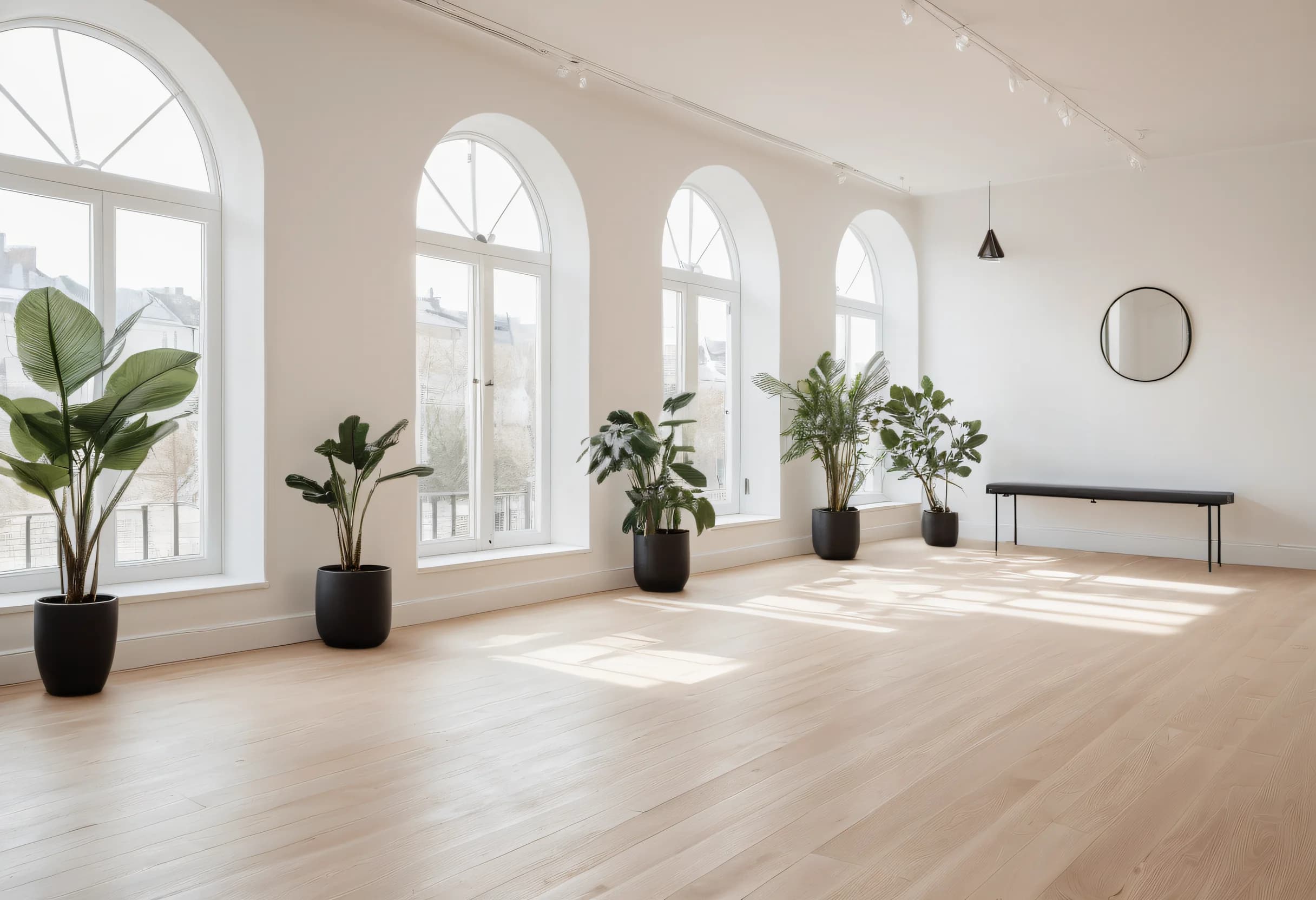
A reformer Pilates franchise costs far more to open, and it keeps taking a cut after that. Club Pilates' 2026 disclosure lists a total initial investment of $403,289 to $1,029,811, plus about 10% of gross sales every week. An independent studio skips the franchise fee and royalties, but it has to build the brand and systems itself.
Disclosure: Zatrovo publishes this blog and sells studio management software. We are not affiliated with Club Pilates or Balanced Body. Franchise figures come from Club Pilates' 2026 FDD as summarized by 1851 Franchise. Equipment pricing comes from Balanced Body's website as of 2026-10-05. Both are linked below.
TL;DR
- Before you compare anything else, work out the franchise's monthly local-marketing floor at your projected revenue. A $1,500 minimum costs a $30,000-a-month studio 5% of sales.
- Get real reformer quotes before you accept any "equipment package" figure. Twelve Allegro 2 machines list from $48,600.
- Use the 14-day disclosure window to call franchisees who left the system, not only the ones the franchisor suggests.
What does a reformer Pilates franchise actually cost upfront?
Club Pilates' 2026 disclosure puts the franchise fee at $55,000 to $65,000 and the total opening investment at $403,289 to $1,029,811.
Those figures come from the brand's 2026 Franchise Disclosure Document, summarized by trade publication 1851 Franchise. The same filing lists a fitness equipment and initial FF&E package of $128,986 to $170,034. It also requires $100,000 in liquid capital and a $500,000 net worth before you qualify.
The headline fee is the smallest part of that range. The gap between the low and high totals comes mostly from the lease, the buildout, and the working capital you hold during ramp-up. A second-generation fitness space with showers and HVAC already in place sits near the low end. A raw shell in a new retail center pushes you toward the top.
The franchise fee is also mostly a sunk cost. You cannot resell a half-used territory the way you can sell twelve lightly used reformers.
What do ongoing franchise fees take out of revenue each month?
Expect 10% of gross sales to go to royalty and brand fund, plus a local marketing floor of $1,500 a month or 2%, whichever is greater.
The Club Pilates terms are an 8% weekly royalty, a 2% brand development fund, and local advertising of "the greater of $1,500 or 2% of the prior month's gross sales." The last clause is easy to skim past, and it matters more than it looks.
The $1,500 floor only stops applying once 2% of monthly sales passes $1,500. That happens at $75,000 a month, or $900,000 a year. Below that, the smaller the studio, the larger the share of revenue the floor takes. A studio grossing $30,000 a month in its opening quarter spends 5% of sales on local ads, on top of the 10%.
How much does an independent studio spend on reformers?
Balanced Body lists the Allegro 2 from $4,050 and the Studio Reformer from $4,460, so twelve machines start near $49,000 to $54,000 before freight.
The Balanced Body commercial reformer page shows the Allegro 2 from $4,050, the Studio Reformer from $4,460, and the Rialto at $3,495. Twelve Allegro 2 machines come to $48,600 at list. Twelve Studio Reformers come to $53,520.
Those are starting prices. Boxes, jump boards, mats, freight, and assembly cost extra. Check stock and delivery lead times before you sign a lease, because waiting on equipment costs real money once the rent clock is running.
The franchise package figure is not a reformer-only number. It covers the equipment plus initial furniture, fixtures, and equipment. Compare it line for line against your own quotes for reformers, front-desk furniture, retail shelving, and the sound system. Do not compare it against reformer prices alone.
Consider ordering one reformer beyond your planned class size. When a spring or rope fails mid-week, you move the client to the spare instead of canceling their booking.
Where does the independent owner's money go instead?
It goes into the things a franchisor normally hands you: a tested floor plan, a class format, instructor training, a booking stack, and a brand people recognize.
The independent saves the fee and the royalty, then pays for these pieces in cash or in time:
- Class programming. Someone has to write the beginner-to-advanced progression and the cues instructors use, so a Tuesday 6am class feels the same as a Saturday 9am one.
- Instructor pipeline. You either hire certified instructors at market rates or fund comprehensive training yourself. Our guide to opening a Pilates studio covers the hiring sequence.
- Pricing architecture. Intro offer, class packs, and memberships need to be designed before launch. Late fixes confuse your first 200 clients. Benchmarks are in our Pilates membership pricing guide.
- Software and payments. Booking, waitlists, and late-cancel fees have to be set up and tested before presale.
A common mistake is underspending on presale rather than on equipment. A franchise forces local marketing spend through the floor clause. An independent can skip it, then open to a half-empty timetable.
How do class economics differ between the two models?
The room math is identical: reformers times classes times fill rate. The difference is how many cents of each dollar you keep afterward.
Worked example (illustrative): a 12-reformer studio running 30 classes a week has 12 x 30 = 360 spots. At 75% fill that is 270 visits. At $28 average revenue per visit, that is 270 x $28 = $7,560 a week, or $7,560 x 52 = $393,120 a year. A franchise takes 10% ($39,312) in royalty and brand fund. Monthly sales are $393,120 / 12 = $32,760, so 2% is only $655 and the $1,500 local-ad floor applies: $1,500 x 12 = $18,000. Total brand-mandated spend is $57,312, about 14.6% of revenue.
An independent with the same room and the same fill keeps that $57,312, minus whatever it chooses to spend on marketing. That gap is the whole argument. The question is whether the brand name pushes fill above 75%, or average revenue above $28, by enough to cover it.
Fill rate moves faster than price. Going from 75% to 85% fill in the same 360 spots adds 36 visits a week. At $28, that is $1,008 a week, or $52,416 a year. A franchise pays for itself mainly by filling the 6am and 7pm slots sooner. A logo does not raise what each class is worth.
Is the franchise fee load worth it at average revenue?
It can be, if the brand fills reformers faster than you could alone. The 2026 disclosure reports $987,800 average FY2025 gross revenue across 1,005 studios.
At $987,800 a year, monthly sales are about $82,317. That is above the $75,000 point, so local advertising is 2% rather than the floor. Royalty and brand fund come to $98,780. Local ads come to about $19,756. Total mandated spend is about $118,536, or roughly 12% of sales.
That is a lower share than in the smaller-studio example above, which shows how the fee structure works: it costs more, as a share of revenue, in the months you can least afford it.
Two cautions. First, an average is pulled up by mature, high-volume studios, and yours will be neither in year one. Ask the franchisor's development team how studios that opened in the last two years performed. Second, gross revenue is not take-home. Rent, instructor pay, and fees all come out before you see anything. Our Pilates studio business plan walks through the cost lines that sit below gross sales.
What must a franchisor give you before you sign?
Federal rules require the franchise disclosure document at least 14 calendar days before you sign or pay anything. Use every one of those days.
The FTC Franchise Rule at 16 CFR 436.2 sets that 14-day window. A workable sequence:
- Days 1 to 3: Read Item 7 (initial investment) and get two local buildout quotes and one lease quote to test the franchisor's ranges against your market.
- Days 4 to 7: Read Item 19 (financial performance) and write down every assumption behind the figures you are relying on.
- Days 8 to 12: Call owners from Item 20, including those who closed or transferred in the last year. Ask each the same three questions: months to break even, actual local-ad spend, and instructor turnover in year one.
- Days 13 to 14: A franchise attorney reviews the agreement, especially renewal terms, territory, and equipment refresh obligations.
Former owners are often the most useful calls on that list, because the franchisor does not choose who they are.
Which owners do better as independents?
Owners with an existing client list, a certified instructor bench, or a niche like postnatal or rehab usually keep more by staying independent.
The franchise trades margin for speed and systems. If you already have the speed, you are paying for something you own. Three profiles tend to come out ahead independent:
- The instructor-owner with a following. If 80 regulars will move with you, your launch problem is mostly solved. Ten points of gross sales is a high price for a brand you do not need.
- The niche operator. Pre- and postnatal, clinical reformer, or small-group classes for older adults rarely fit a franchise's standardized class menu.
- The small-market owner. In a town where one studio can realistically gross $30,000 a month, the $1,500 local-ad floor adds 5 points of revenue on top of the 10% fee, a load a higher-volume franchise location never carries.
The franchise usually suits first-time owners who have never written a class progression, hired an instructor, or run a front desk. For them, the systems are worth paying for.
How should you compare the two before committing?
Run the Three-Line Test: build one budget for each model, then compare opening cash, monthly fixed load, and year-three take-home side by side.
The test takes an afternoon in a spreadsheet:
- Line 1, opening cash. Franchise: the Item 7 figure adjusted with your local quotes. Independent: equipment quotes, buildout, deposit, presale marketing, and six months of working capital.
- Line 2, monthly fixed load. Rent, base instructor pay, software, and insurance for both. Then add the franchise's local-ad floor, since it behaves like a fixed cost below $75,000 a month.
- Line 3, year-three take-home. Use the same 360-spot room for both models. Give the franchise a higher fill rate only if Item 20 owners confirmed one. Subtract 10% royalty and brand fund from the franchise column.
If the franchise wins on Line 3 only when you assume fill five points higher than the independent, the brand is doing real work. If it needs fifteen points, it probably is not. More planning resources for owners are collected in our Pilates studio guides.
Run your studio on Zatrovo
Model class capacity, fill rate, and pack pricing for your reformer studio before you sign a lease or a franchise agreement.

We write playbooks for studio operators — based on data from thousands of studios running on Zatrovo across pilates, yoga, lash, nail, massage, salon, dance, and fitness.
Related reading
Reformer Pilates Studio Startup Costs: Equipment and Buildout
Reformer Pilates studio startup costs broken down by equipment, buildout, and the first 90 days, with the numbers owners use to size the budget.
Pilates Studio Business Plan: Real Template with Numbers
A business plan framework with P&L projections for a 12-reformer pilates studio.

Reformer Pilates Studio Insurance: Equipment and Injury
Reformer pilates studio insurance explained for owners: which policies cover equipment, client injuries, and instructors, and what to ask your broker.