Dance Studio Business Plan: Enrollment Targets and Revenue by Room Count
Business plan model for 1-room and 3-room dance studios — with enrollment targets, recital revenue, and break-even by month.
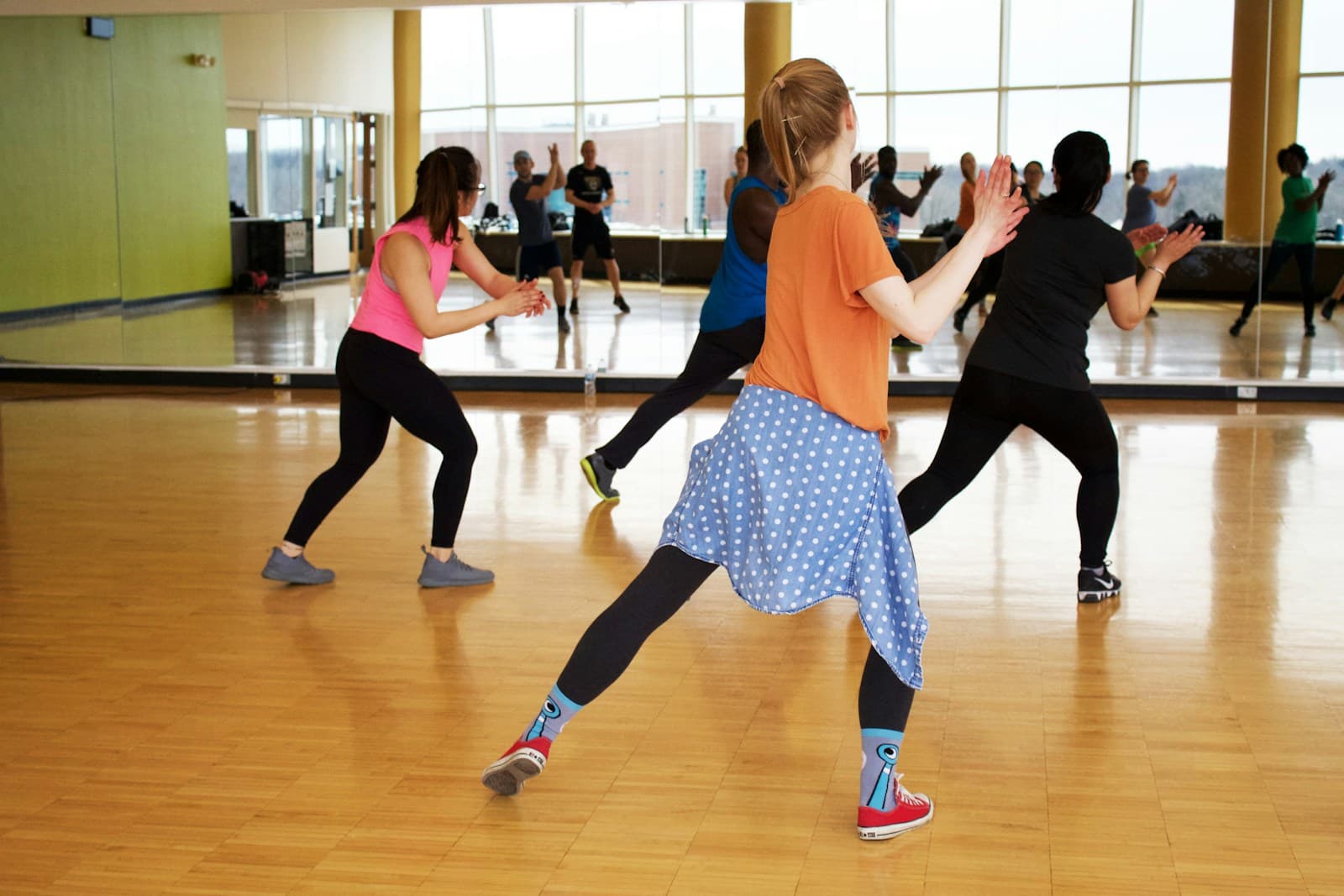
Dance studios that omit recital revenue from their business plan understate annual income by 20–30% — and often conclude the business won't work when the numbers actually support it. This model covers 1-room and 3-room studios with enrollment targets, recital revenue broken out as its own line, and realistic break-even timelines by month.
Why Do Most Dance Studio Business Plans Get It Wrong?
The most common error is building a business plan on monthly tuition alone.
Dance studio revenue has a fundamentally different shape than most service businesses. Monthly tuition creates the recurring base, but recital season — typically May or June — generates a revenue spike that can equal two or three months of regular tuition in a single event. A business plan that ignores this tells the wrong story about the business: it makes cash flow look worse than it is in May, better than it is in December, and obscures the real break-even timeline.
The second error is under-forecasting enrollment ramp. New studios rarely hit their target enrollment in month one. A realistic ramp for a well-marketed dance studio is 20–30% of target enrollment at opening, reaching 60–70% by month six, and 80–90% by the end of year one.
What Does a 1-Room Dance Studio Look Like Financially?
A single-room studio in a leased commercial space is the entry point for most new operators. Here is a realistic model.
Physical setup: 800–1,400 sqft, sprung hardwood floor, mirrors on one wall, portable barres, sound system. Monthly rent: $2,000–$4,500 depending on market.
Enrollment target: 60–80 recreational students across 8–12 weekly classes. Class sizes averaging 8–12 students.
Pricing model: $100–$160/student/month for one weekly class. Students taking two disciplines pay a reduced rate for the second class (typically 80% of the first).
Revenue at steady state:
The conservative scenario — 55 students, $120/month — generates $87,200 in annual revenue. If monthly fixed costs are $8,500, that studio loses money in 9 of 12 months on tuition alone. Add the recital revenue spike and the picture changes: the business is operationally viable, with cash flow timing that requires a credit line or pre-recital cash reserve, not a fundamentally different model.
What Does a 3-Room Dance Studio Look Like Financially?
A three-room studio is a meaningfully different business — more instructors, more fixed cost, more scheduling complexity, and significantly more revenue potential.
Physical setup: 3,500–5,500 sqft, three dedicated rooms (usually ballet, contemporary/hip-hop, and a smaller private/acrobatics room). Monthly rent: $6,000–$14,000.
Enrollment target: 180–280 recreational students, plus a competitive team of 30–60 students.
Revenue model:
The competitive team is a meaningful revenue addition. Competitive students typically pay 30–50% more in tuition and generate additional revenue from private coaching, competition entry fees (where the studio captures a margin), and costume charges. A competitive team of 40 students at $200/month in additional tuition contributes $8,000/month above the recreational baseline.
How Do You Model Break-Even for a Dance Studio?
Break-even analysis for a dance studio should use two calculations: monthly operating break-even and annual cash flow break-even.
Monthly operating break-even: Fixed monthly costs divided by average revenue per student. If fixed costs are $14,000 and the average student generates $135/month, you need 104 students to cover fixed costs. That does not include owner draw or profit.
Annual cash flow break-even: Total annual fixed costs divided by annual revenue per student (including recital contribution). If annual fixed costs are $168,000 and the average student generates $1,800/year in tuition plus an allocated $130 in recital revenue ($1,930 total), you need 87 students. The recital allocation changes the enrollment target materially.
The difference between "tuition only" and "including recital" in the break-even table is significant. The 3-room studio with competitive team needs 168 students to break even when recital is included, versus 207 without it. That's not a rounding error — it's the difference between a studio that looks viable and one that looks like a stretch.
What Are the Startup Costs for a Dance Studio?
Startup costs break into four categories: space fit-out, equipment, pre-opening marketing, and operating reserve.
Space fit-out: Sprung hardwood flooring ($8–$15/sqft installed) is the largest single item. A 1,200 sqft studio floor runs $10,000–$18,000. Add mirror installation ($3,000–$8,000), sound system ($2,000–$5,000), lighting upgrades ($1,500–$3,500), and signage ($1,500–$4,000).
Equipment: Portable barres ($800–$2,000 for a full set), mats, props by discipline. A fully equipped single room runs $3,000–$7,000 in equipment beyond the floor and mirrors.
Pre-opening marketing: Website, social media setup, community advertising, and introductory class offers. Budget $3,000–$8,000 for a real pre-opening push.
Operating reserve: Three months of fixed costs held in cash before you open. This is not optional — it is the survival buffer for the enrollment ramp period.
How Do You Add a Competitive Team to Projections?
Competitive teams should be modeled as a separate revenue and cost center, not blended into recreational projections.
Revenue additions from a competitive team: higher tuition ($180–$250/month versus $120–$160 for recreational), private coaching revenue (typically $60–$100/hour, two to four hours per student per month), costume income, and competition entry fees where the studio captures margin.
Cost additions: more instructor hours, costume vendor relationships, competition travel logistics, and the time cost of running auditions and team management.
The net contribution of a competitive team varies widely. A well-run team of 40 students can add $8,000–$15,000/month in net revenue above the recreational baseline. A poorly structured team — where private coaching underprices instructor cost, or competition fees are not passed through correctly — can break even or worse.
Model it explicitly. See the dance studio ops playbook for how to structure competitive team pricing and the dance class pricing guide for tuition rate benchmarks.
What Technology Does a Dance Studio Need From Day One?
Three things only: studio management software, an email/SMS tool, and a basic accounting system.
Studio management software handles enrollment, tuition billing, class scheduling, and attendance tracking. Do not attempt to run a dance studio on a spreadsheet and a Venmo account — the administrative overhead becomes unmanageable at 40+ students, and the data you need to run the break-even model above does not exist without a proper system.
Email and SMS is your primary communication channel with dance families. Recital reminders, costume deadlines, schedule changes, and re-enrollment sequences all live here.
Accounting can be QuickBooks or a simple equivalent. The goal is accurate monthly P&L and cash flow visibility, not sophisticated modeling.
For software selection, see the dance studio ops playbook and the opening a dance studio guide.
What Is the First Financial Model to Build?
Before signing a lease, build a 24-month cash flow model with three scenarios: conservative (50% of enrollment target in month 12), base (75%), and optimistic (90%). Run each against your fixed cost structure and your recital revenue assumption.
The question you are answering: in the conservative scenario, can the business survive 24 months with your available startup capital and operating reserve? If the answer is no at 50% enrollment, either the fixed cost structure is too high (find a cheaper space or different fit-out), or the revenue per student is too low (price higher from day one, not later).
See the dance teacher pay rates guide for instructor cost benchmarks you'll need to complete the model.
Run your studio on Zatrovo
Zatrovo handles enrollment, tuition billing, class scheduling, and the reporting you need to track your business plan in real time.

We write playbooks for studio operators — based on data from thousands of studios running on Zatrovo across pilates, yoga, lash, nail, massage, salon, dance, and fitness.
Related reading
Opening a Dance Studio: Floor Space, Disciplines, and the First 50 Students
The floor space, sprung floor decisions, and discipline mix that determine whether a dance studio is viable before signing a lease.

Studio Break-Even Calculator: Month-by-Month Until You're Profitable
A studio break-even calculator — input fixed costs, variable costs, and average revenue per member to see the member count and timeline to break-even.

Beauty Studio Business Plan: Revenue Model for 1-Room and 3-Room Studios
A business plan framework for single-room and three-room beauty studios — with treatment revenue, retail margin, and break-even timeline.