Semi-Private Reformer Sessions: Pricing, Capacity, and Scheduling
Semi private reformer pilates pricing, capacity and scheduling explained: how to set per-seat rates, cap reformers per instructor, and fill every bed.
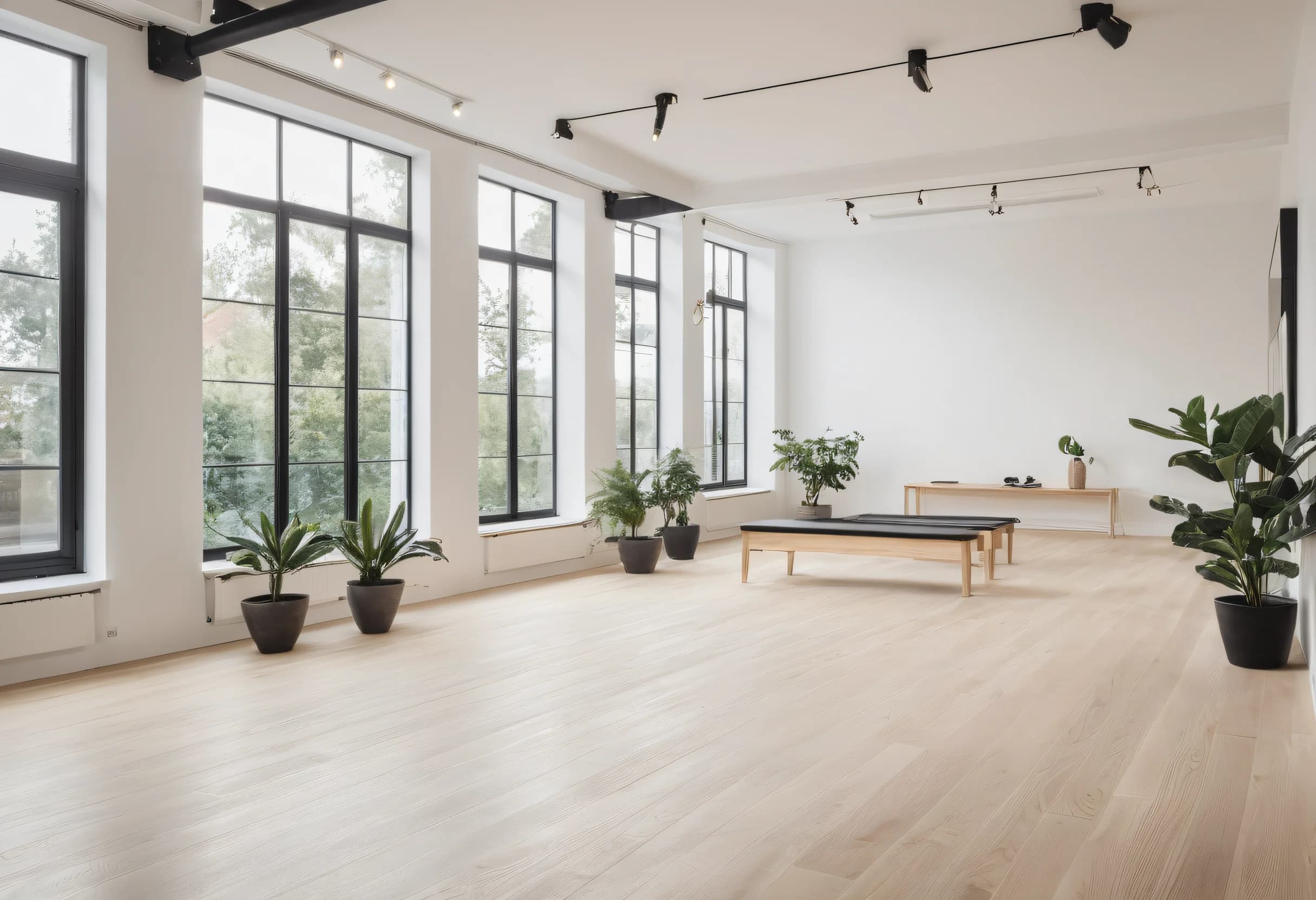
Price a semi-private reformer seat at roughly half your private rate, cap the room at four reformers per instructor, and sell fixed weekly slots rather than floating packs. Call it the Half-Rate, Four-Bed Rule. At a $95 private, that means $48 to $55 per seat, and three filled beds out-earn the private every time.
What counts as a semi-private reformer session?
A semi-private is two to four clients on reformers with one instructor, programmed individually, held at a fixed weekly time. It is not a small class.
The distinction matters at the front desk. In a group reformer class, everyone does the same flow and the instructor cues the room. In a semi-private, the instructor writes three different spring settings on the whiteboard before the clients walk in, because each person is working a different program. One client might be six weeks past a hip replacement, another training for a half marathon, the third simply wanting a harder version of the class she does on Saturdays.
That programming load is why the cap sits at four. Beyond that, the instructor cannot physically make it around the room in a 55-minute block, and the product quietly becomes a class. Clients pay a premium for the individual attention, and they can tell within two visits when they are not getting it.
How should you price semi-private reformer pilates per seat?
Set the seat at 50 to 58 percent of your private rate. Two seats match the private, and every additional seat is margin on the same instructor hour.
Work backwards from your private rate, not forwards from your group rate. If your 55-minute private is $95, the seat is $48 to $55. If the private is $120, the seat is $60 to $70. The floor is double your group reformer price; below that, clients anchor to the class and treat semi-private as a slightly smaller version of it.
One check most owners skip: run the math for a two-seat session, because that is what you will run in the first eight weeks before a slot matures. Two seats at $52 is $104 for the hour, so you are already ahead of the private while the third bed is empty. If your seat price only works at four beds, it is too low.
How many reformers per instructor is the right capacity?
Four is the ceiling, three is the working norm. Leave the fourth bed open as a makeup or trial seat until the slot has held three clients for a month.
Owners tend to fixate on four because the revenue table looks best there. In practice, a three-bed default gives you room to move. When a regular misses a week, they can make it up in another semi-private slot on the open bed without displacing anyone. When a prospective client wants to try the format, you have a place to put them at full seat price rather than discounting a private.
Publish the cap on your booking page and in your intro conversation. "Never more than four people, usually three" is a sentence clients repeat to friends. It is also the sentence that justifies the price when someone compares you to a 12-bed class down the road.
Should you sell semi-private as memberships, packs, or drop-ins?
Fixed-slot memberships first, packs second, drop-ins only to fill a known empty bed. The format depends on the same people holding the same time.
A semi-private slot is a small standing appointment. Sell it that way: a monthly membership that reserves a named bed, in a named time, with a named instructor. Bill it monthly on autopay and price it as four or five sessions depending on the calendar. The retention economics work the same way they do for any recurring membership, and the trade-offs between annual and monthly billing are covered in annual vs monthly membership pricing.
Packs of 5 or 10 have a place for travelers and for people testing the format, but understand what they cost you. A pack holder floats between times, which means your Tuesday 6 a.m. slot has two guaranteed people and one maybe. Price packs 10 to 15 percent above the membership per-seat rate so the flexibility has a cost.
Drop-ins exist for one reason: someone canceled and you have a bed. Price them at the top of the range and never list them as a standing option.
How do you schedule semi-private sessions without breaking your class grid?
Block semi-private into fixed daily bands, usually the shoulder hours around your busiest classes, and never let the two formats share a bed at the same time.
The mistake is scattering semi-privates wherever a client asks. Six months later, your 5:30 p.m. group class is competing with a two-person semi-private for the same instructor, and neither runs well. Instead, pick bands: 6 to 8 a.m., 11 a.m. to 1 p.m., and 7 to 8 p.m. are common because they sit beside the peak classes rather than inside them.
Within a band, assign a physical zone. If you have ten reformers, beds one through four are the semi-private zone during those hours. That way a group class can still run on beds five through ten at 7 a.m. while a semi-private runs on the first four, and the instructor of each can see their own people.
Review the bands quarterly. A 7 p.m. band that has held two clients for three months is a candidate to move to 6 p.m., where waitlist demand is higher.
What does a semi-private session actually cost to run?
Instructor pay is the dominant variable cost; equipment is mostly sunk. Model the session on instructor wage plus a per-seat share of rent, not on class-average costs.
The US Bureau of Labor Statistics puts the median hourly wage for fitness trainers and instructors in the low twenties, and reformer-certified instructors in most metros command well above that. Pay semi-private at your private rate or slightly above, because the programming burden is higher than a class. If you pay $45 for the hour and fill three seats at $52, the instructor cost is under 30 percent of session revenue, which is comfortably in range. At two seats it climbs past 40 percent, which is why the two-seat phase should not last more than eight weeks.
Reformers are a capital cost spread over years, and commercial models from major manufacturers are typically quoted rather than list-priced. The operational point stands regardless of the exact figure: a semi-private zone of four reformers earns on the same footprint that a group class needs eight to twelve beds to justify.
How do you handle no-shows and late cancels with three seats?
Use a 12-hour late-cancel window, charge the seat in full, and message the waitlist within 15 minutes of the cancel. One empty bed is a third of the hour's revenue.
Group classes can survive a 2-hour window because an empty spot among twelve barely registers. Semi-private cannot. Publish the 12-hour rule in the membership agreement, repeat it verbally in the first session, and enforce it from the first infraction. Studios that waive the first late cancel almost always end up waiving the third.
When a cancel lands, the sequence is: notify the waitlist for that exact time, then check clients who hold a bed on the same day at another hour, then check pack holders. Fill the bed at the drop-in rate. If the bed is still empty two hours before, let the instructor know so they can plan a two-person session rather than discovering it at the door.
Track backfill rate per slot in your booking system. A slot that fails to backfill twice in a month is telling you something about its time, not about your clients.
How do you fill the empty third and fourth reformer?
Fill from inside the studio first: your private clients who want to spend less, and your group regulars who want more attention. Outside marketing comes last.
The best semi-private prospects already book with you. A private client at $95 who has plateaued in progress and mentions cost is an ideal candidate for a $52 seat in an existing slot. A group regular who lingers to ask questions after class is the other. Instructors should flag both to the front desk weekly, and the offer should be specific: "There is a bed open Thursday at 7 a.m. with Maya, and two people you would get on with."
Demand is not the problem. The Health & Fitness Association's annual reporting puts US fitness facility membership at more than 75 million people, and trade coverage of SFIA data puts US Pilates participation above 13 million. The problem is routing existing interest into a specific bed at a specific time. Watching for the signals that a private client is cooling off, which overlaps with at-risk member detection, gives you the conversion moment before they cancel outright.
When should a client move up to private or down to group?
Move to private when programming diverges beyond what shared time allows. Move toward group when cueing needs fall and the client asks about cost. Review rosters quarterly.
The private trigger is usually clinical: a surgical referral, a late-stage pregnancy, or a physical therapist's protocol that needs spotting on every rep. Tell the client directly that the semi-private format cannot give them what they need right now, and price the private as a temporary step rather than a permanent upgrade.
The group trigger is softer. A client who has held a semi-private slot for six months, needs almost no correction, and has started asking about the class schedule is ready. Offer group as an add-on first, not a replacement. Clients who jump straight from semi-private to group tend to miss the attention and drift away within a quarter.
Sit down with each instructor once a quarter and go through every semi-private roster by name. Ten minutes per instructor is enough.
What do studios get wrong about semi-private reformer pricing?
The common error is pricing semi-private as a discounted class rather than a shared private. That anchors the seat too low and fills the room with the wrong clients.
The tell is a seat price under twice your group rate. Owners set it there because they are afraid nobody will pay $52 to share an instructor. What happens instead is that class clients migrate to the cheap semi-private, the class thins out, and the instructor is now running a four-person session for the revenue of a six-person class.
The second error is selling packs before memberships. Packs feel easier to sell, but they produce floating clients, and floating clients cannot hold a fixed slot. The third is a short cancel window borrowed from the class policy. Each of these is a structural choice made in the first month that takes a year to undo.
Payment friction matters more at this price point too. A $220 monthly membership that fails on a card produces a hard conversation; the trade-offs are laid out in ACH vs credit card billing for studios.
Run your studio on Zatrovo
Cap each semi-private slot at four reformers and auto-fill a canceled bed from the waitlist for that exact time.

We write playbooks for studio operators — based on data from thousands of studios running on Zatrovo across pilates, yoga, lash, nail, massage, salon, dance, and fitness.
Related reading
Reformer Pilates Pricing: Why It Costs More Than Mat
Reformer Pilates pricing explained by studio operators: why reformer costs more than mat, how wide the price gap should be, and when to raise it.
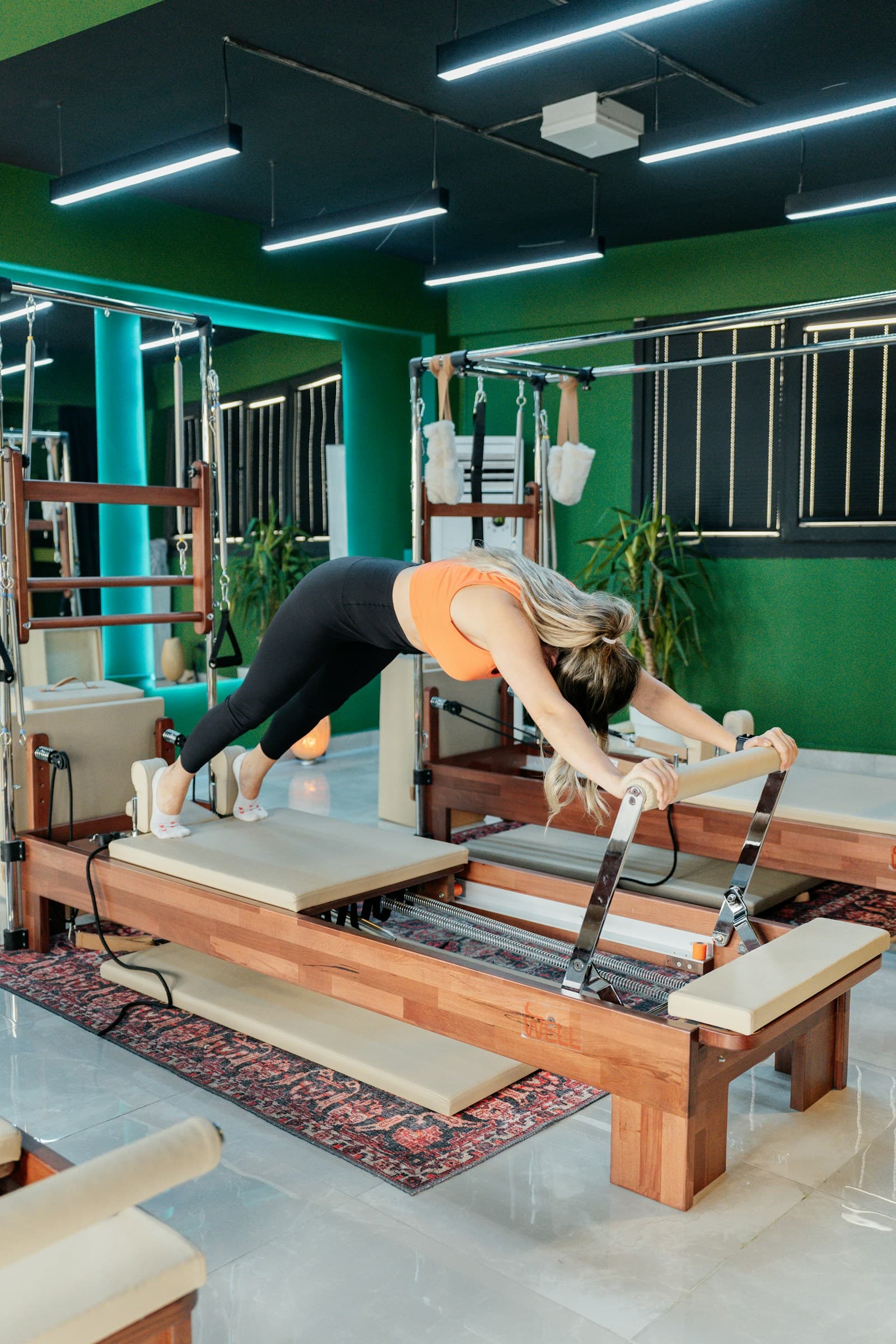
Pilates Private Session Pricing: 1:1 vs Duet vs Semi-Private
Price points, instructor splits, and booking rules for private, duet, and semi-private pilates sessions.
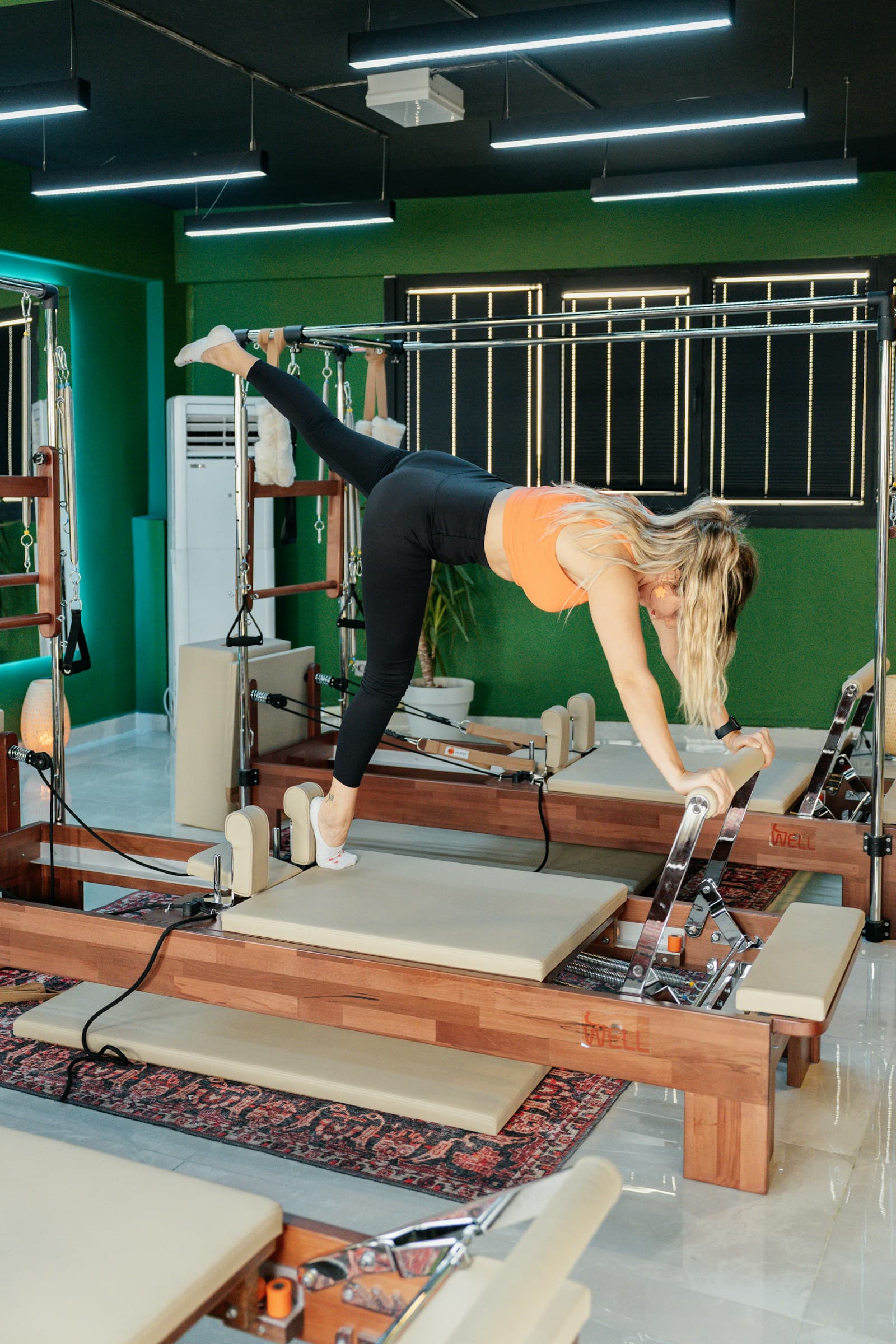
Pilates Class Pack Pricing: Real Benchmarks from 300+ Studios
What pilates studios charge for 5, 10, and 20-class packs in 2026 — with margin math that works.